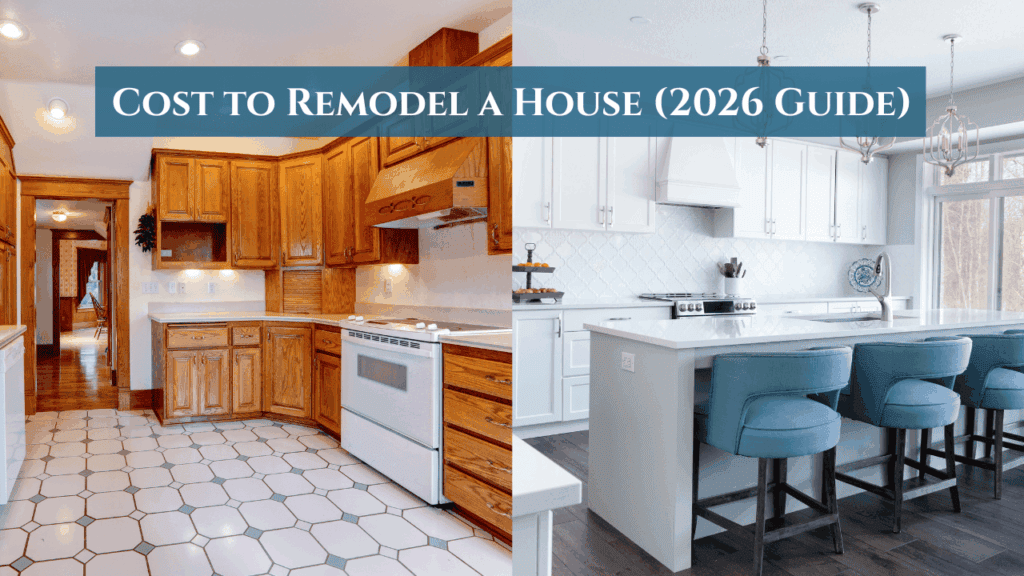
You’re getting ready to start a home remodel, but can’t risk spending more than your budget allows. It’s important to know exactly how to plan a remodel on a budget so you can see it finished. Running out of money is a real fear that will end the remodel prematurely, leaving your home in a state of chaos. The good news is there’s a proven technique for staying on budget. Now let’s take a closer look at this process.
Table of Contents
ToggleSet Clear Goals for Your Home Remodel
Abraham Lincoln once said “If you give me six hours to cut down a tree, I will spend the first four hours sharpening the axe.” This quote is meant to emphasize the level of importance one should hold in the process of preparation.
Preparing for a remodel is more important than doing the work itself. That’s why setting clear goals is an important part of the process. This gives you insight into what will and won’t be included in the project. From this information you can better determine the budget size you will have to work with.
Assess The Home’s Current Status Before The Remodel
This is where you will take inventory on what stays and what needs to go. Are there any parts of the space that’s in need of repair or replacement? Are there any aspects you want to change like layout, color palette, etc? Do a walk through with a note pad and write down everything you like and don’t like about the current status of your home.
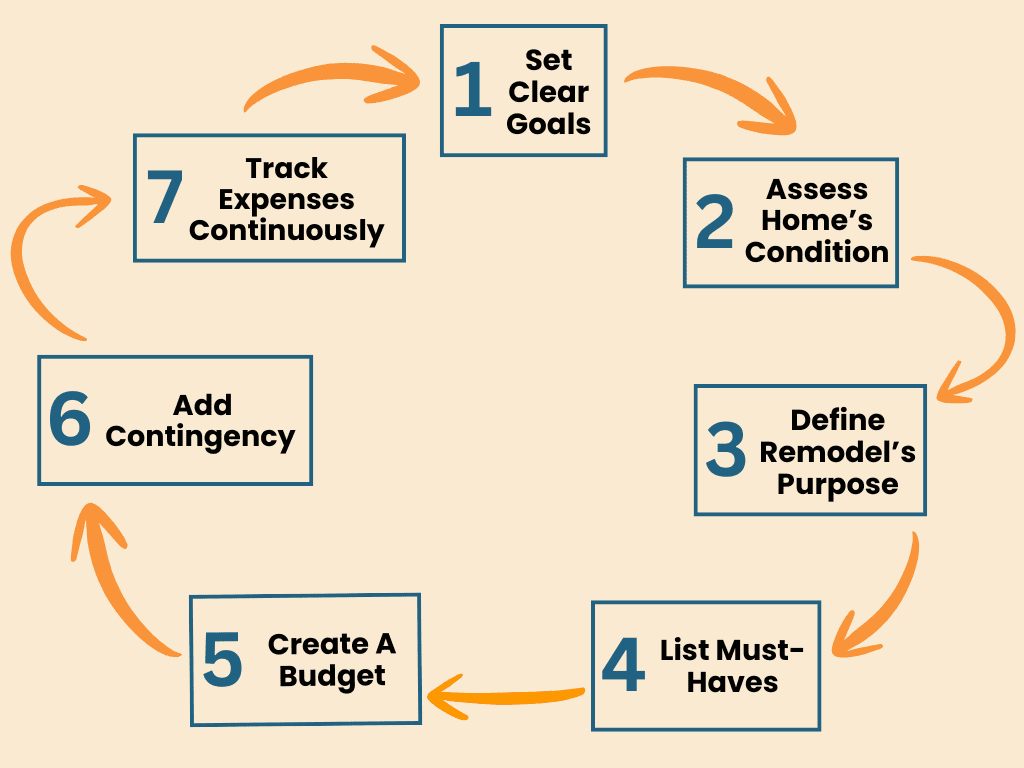
Define The Purpose of the Remodel
Having a clear purpose gives a direction to aim for as the remodel progresses. There are several purposes for a home remodel to consider. Your reason may fall into more than one category. Here is a brief list of some of the most popular reasons to go through a home remodel.
Raising the home’s value
Remodeling areas of your house, like a kitchen or bathroom can raise the amount of appeal a potential buyer feels in the home.
Update the style
As styles evolve, rooms of a house can be locked in time like a time capsule. Adding a fresh coat of paint and updated lighting and fixtures can do a lot to quickly bring the space into the modern era.
Improve functionality
Altering the floor plan can make the space more usable. Get a professional involved when making changes to the home’s structure.
Energy efficiency
When increasing your energy efficiency by updating windows, insulation, and appliances, you will end up paying less in costs to heat your home in the long run.
Repair or fix issues
Issues rise in every home. These issues can be larger problems if left un addressed. Fixing these issues can be a great opportunity to update the rest of the space as you see fit.
Expand space
Adding space to the home isn’t the same as remodeling the home, but it’s a reason why homeowners do work. Check with the city to make sure your plot has enough room for the addition you want to have.
List Your Must-Haves and Nice-to-Haves
Take a deeper look at the real reason why you are doing this remodel. Are there any features you can’t live without? What areas are you able to bend on if necessary? The list below are some of the more common must-haves homeowners want to include in this type of project. Take a look and write down any that stands out to you.
Must-Haves
- Updated kitchen
- Functional bathrooms
- Improved storage options
- Improved energy efficiency
- New flooring
Nice-to-Haves
- Open concept layout
- Ample lighting
- Updated plumbing and electrical
- Curb appeal
- Technology integration
Use this list as a starting point for getting the thought process on what you want most started. Try to be as specific as you can because this will help you hone in on those aspects of your remodel that will make you the happiest.
Once you have your must-haves and nice-to-haves written down, you can see what will be needed from your budget. This also lets you better understand what can be left out if necessary.
Create a Realistic and Detailed Budget
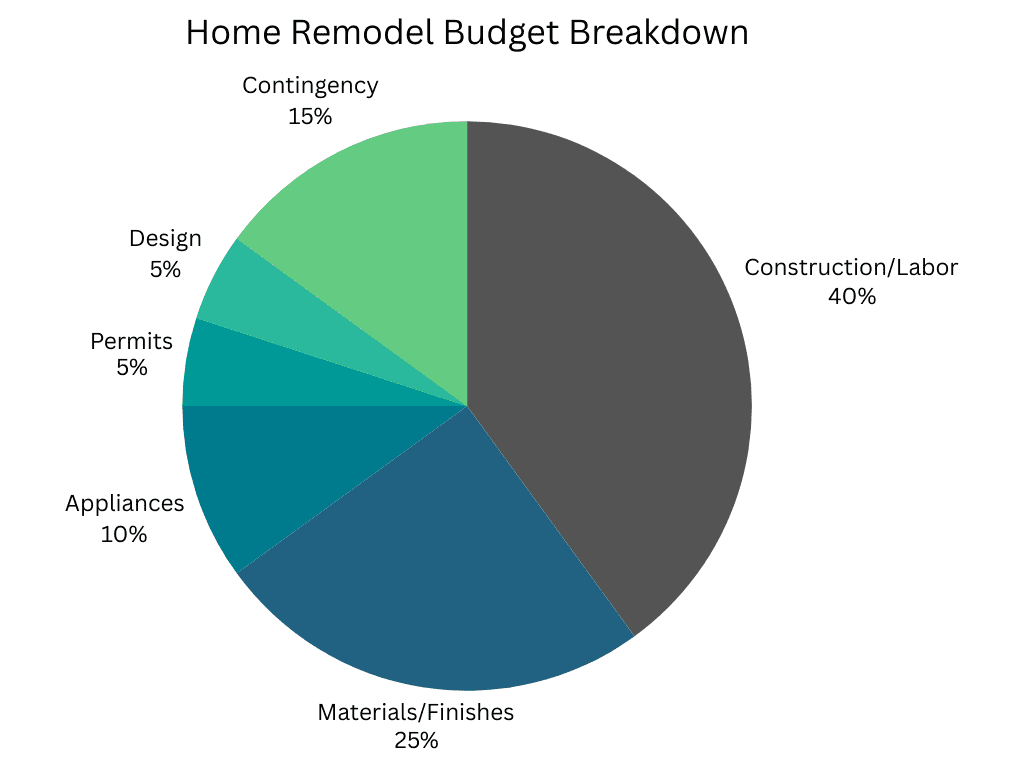
There are some key categories to look at that will be included in your budget. Some of these are 100% required, while others may not apply to this remodel. Take a look at the list below to see what will and won’t be included:
Construction & Labor
Design Changes
Cabinetry & Storage
Materials & Finishes
Appliances
Permits
Hidden Costs
These are the main pieces that go into planning a remodel budget. There is a formula you can use to calculate more specifically what your project’s budget should be. To see that formula visit the article titled Home Remodel Cost EstimatorHome Remodel Cost Estimator.
Strategies for Keeping on Budget in a Home Remodel
Below is a list of some ways of staying on budget. Pay close attention and be creative with your money saving techniques. Now that you have a good idea of the type of work you’ll be doing, it’s easier to find ways to save money. And don’t be afraid of making adjustments to your scope of work as needed. You already know some of your nice-to-have items may need to be excluded.
Set a clear budget upfront
Begin the project knowing what your maximum amount is you can spend. This will help you keep on track, and let you know when and where costs should be cut.
Build in a 10–20% contingency fund
You should go into this type of project knowing there will be hidden costs. There are often problems that arise that need to be dealt with before moving forward.
Get multiple quotes
Talk to multiple contractors before getting started on your project. Go to several flooring stores before picking what product you will be using. Talk to more than one cabinet shop. This allows you to decide on the one that best satisfies your goals. If you plan on hiring a contractor I put together the Hiring The Ideal Contractor Checklist to help.
Track expenses in real time
Keep a spreadsheet from the beginning of the project to help visually understand the status of your budget. Headings to include are: Category, Item/Description, Estimated Cost, Actual Cost, Variance, Paid, Notes.
Prioritize must-haves vs. nice-to-haves
Write down the most important parts to include, and the ones that aren’t as important. Use this when making decisions on the fly as the project is underway.
Review invoices carefully
Every dollar matters when it comes to keeping tabs on a remodel. That means it’s important to review each invoice or receipt for any issues or discrepancies.
Research and Plan Before Hand
Planning for a remodel won’t be finished until the work is done. Staying on top of the planning will keep things moving smoothly in the right direction. This can happen in several different ways.
Plan the major decisions in advance. You want to know what the stages of your remodel are ahead of time so you can have everything ready when you need it.
Plan Major Decisions in Advance
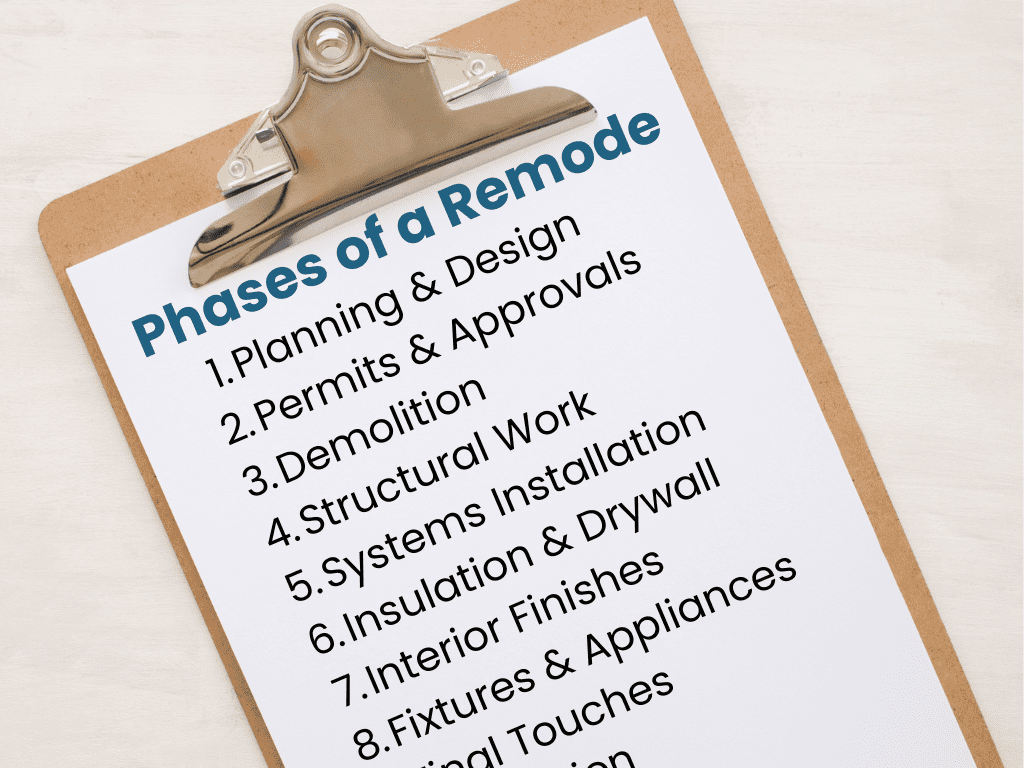
The most important part of planning is to know the order of the remodel’s phases. This will be the order of your planning.
Below is a list of the procedure for a home remodel project. This will help keep you on track with things like finding the right materials when they are needed. It will ultimately help keep the project progressing in the right direction.
Planning & Design
Permits & Approvals
Demolition
Structural Work
Systems Installation
Insulation & Drywall
Interior Finishes
Fixtures & Appliances
Final Touches
Inspection & Walkthrough
Depending on the scope of your project, you might not require every phase in the above list. Use the order to help guide you through the planning process.
Cost-Saving Remodeling Strategies
There are some great ways to cut costs during a remodel. Below is a brief list of some of the more obvious ways to save. Get into a creativity mindset where you will start looking for cost-saving strategies anywhere payments are made.
DIY Home Remodeling
If you are someone who likes to get their hands dirty, doing the work yourself can be a great way to save on costs. It’s easy to feel overwhelmed when tackling a home remodel because the finish line seems so far away.
I like to consider the remodel as a series of small projects stacked on top of each other. As long as you know what order they should be done in, it’s a lot more manageable. Remodel Upgrade is a great resource of information to help guide you through some of these stages. If you don’t see an article that answers your question, be sure to drop a comment below with your question. I will use these comments to give me topics to write about in future articles.
Buy Discounted Materials When Possible
Shop at discount outlets or clearance sections when looking for the project’s “nice-to-haves”. There may be clearance cabinets you can use in your configuration that fit the design. Or a tile shop might give you a good deal on the old tiles they are trying to move out the door.
If you look at multiple places in your area you might find clearance items you can incorporate into your remodel. If you keep an open mind when purchasing these materials, you can be very happy with your choice.
Handle The Debris Removal Yourself
A contractor will charge you by the hour to do a dump run. If you have access to a pickup truck you can offer to do it yourself. You will only be paying for the dump fees and your time. Some possibilities if you don’t have a truck is to ask a friend or family member if you can borrow theirs. If you don’t know someone with a truck you can rent one from a company like U-Haul.
Shop Mid-Range Finishes
When looking for items to use in the remodel, try focusing in the mid-range price bracket. You don’t want to shop in the low-range because these are often such low quality you will most likely need to replace them sooner than needed. And the high-range is so expensive it will put you beyond your budget.
There are many options nowadays in the mid-range that are both high quality and fashionable. There is a strong possibility you will find something you love that won’t break the bank.
Take a look at your must-have list and see which items you want that you can’t find in the medium price range. It’s okay to shop for some of the items in the high price range, but try to keep it to a minimum. This should be factored into the budget.
Staying on Track in the Remodel
Delays in the remodel will lead to added expenses in the long run. It’s important to stay on track to ensure you will be keeping expenses to a minimum. I have a few tips you can use for this, but if you think of other things that will help, include those in your home remodeling process as well.
Monitor Your expenses
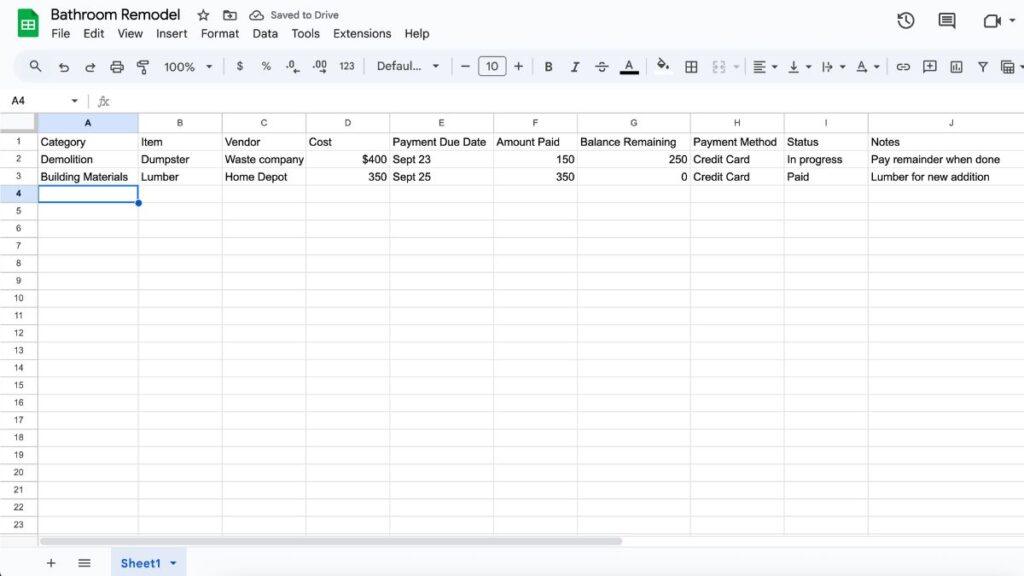
I hope you’re noticing the theme of it’s important to know exactly where your finances are going. This can best be done by keeping a spreadsheet to help. If you don’t have any software that does this, you can start a free spreadsheet by going to Sheets.Google.com. All you need to do is sign up.
To get the total of the costs you have been spending you will want to click on a random cell below all your values. This cell should be blank, with no value listed in it.
Once you have a cell chosen, type these characters =SUM(
Click and hold the top value in the Amount Paid column, and drag the cursor down to the bottom value.
The cell you previously chose should have a value in it for you. Use this value to calculate the Balance Remaining value after each of the expenses were paid. This column will help you figure out exactly how to plan a remodel on a budget.
Communicate With Others Involved in the Remodel
If you have contractors working with you it’s important to be on the same page. Be a part of the decision making when it comes to materials used, and other major decisions.
Have them give you all the receipts so you can keep them in your paperwork. There is always a chance that the materials purchased will need to be returned for some reason or another. The receipt will be helpful when this happens. Enter the amounts into your spreadsheet before filing the receipt away.
Expect Contingencies
You can count on there being unforeseen expenses that will need to be paid during a home remodel project. The larger the project the more opportunity there is for this. Keeping a contingency is a good habit that will let you be ready for when issues come up.
Conclusion
Knowing how to plan a remodel on a budget means you will be focusing on some key principles. First is the planning phase of the remodel. Knowing everything your remodel includes will help you when in the next phase. Now you must prioritize what’s most important to you and your family. You will be deciding on must-haves and nice-to-haves.
You want to be creative when it comes to saving money. This will help you reach your goal of having a newly remodeled space that you absolutely love.
I hope this article helped you in your remodeling journey. If you liked this article, check out another one that interests you below.
Here at Remodel Upgrade I am dedicated to helping you turn your home into your own private sanctuary. If you have any questions about your remodel please leave it in the comment section below.
Please check out my Hiring The Ideal Contractor Checklist. It is a free checklist that will walk you through all the stages of finding, interviewing, and hiring a contractor for your remodel project.
Thanks for reading.You Got This,
Kevin

Kevin
I grew up in a family where my dad and several uncles were general contractors. They took me to the jobsites, and also taught me so much about home maintenance. I remember spending several summers in high school helping my father build houses. It gave me so much knowledge that I am excited to share!