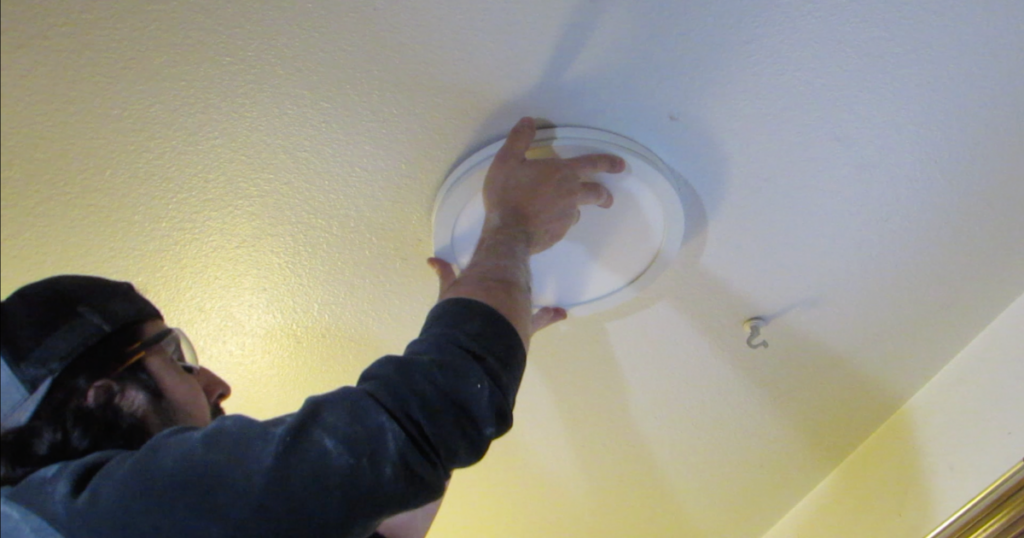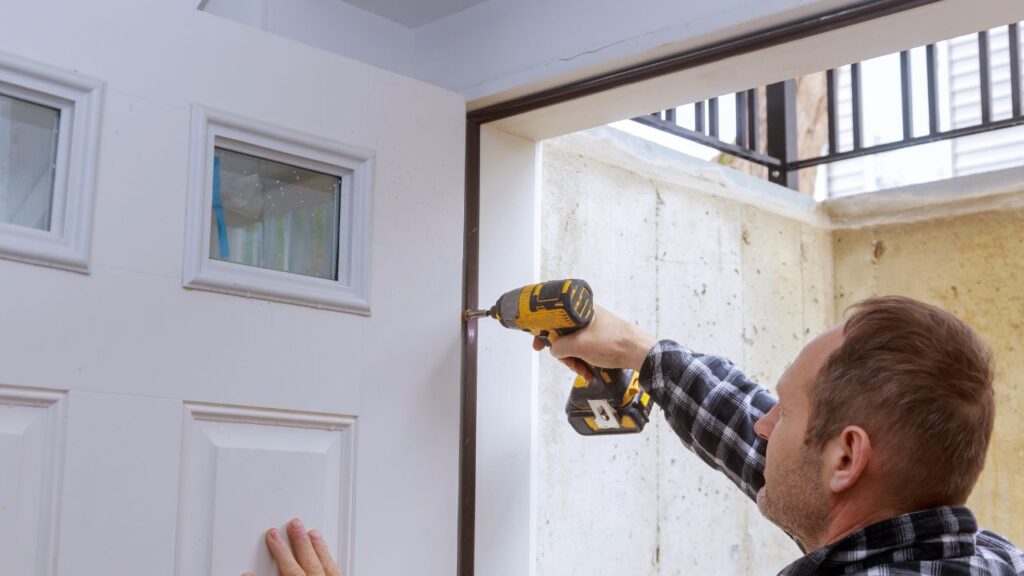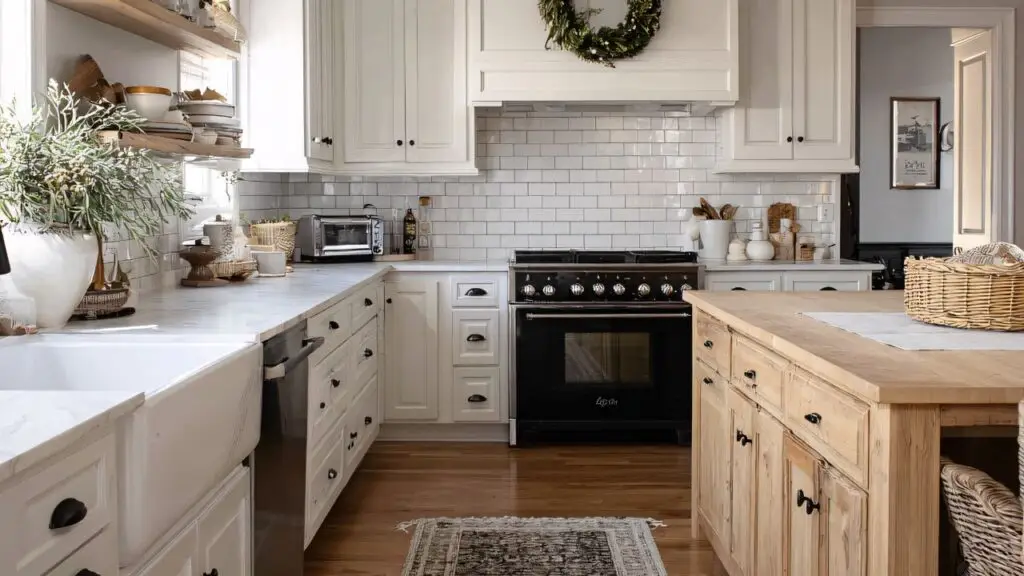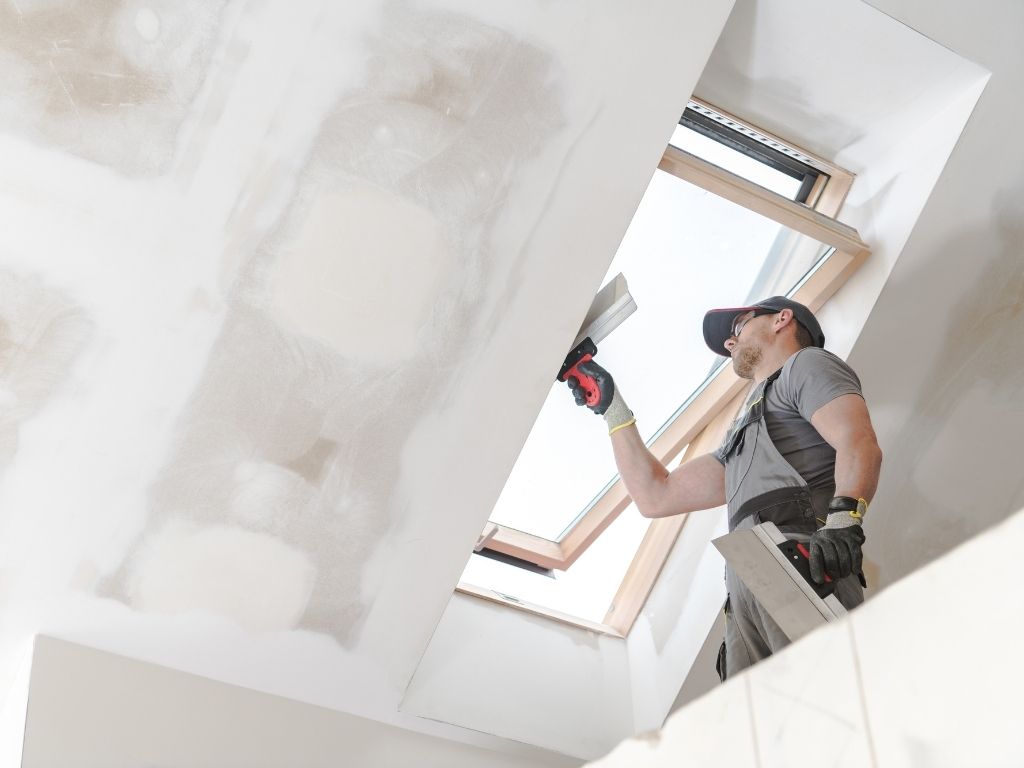
If you aren’t sure how to start a home remodel, there’s a real chance some costly mistakes get made along the way. With the right preparation, it’s not hard to avoid these issues and save yourself a lot of money, stress, and time. This step by step home renovation checklist walks you through every stage of the process, from setting your goals and budget to hiring the right contractor. You’ll learn exactly what to do, and what to avoid, as a first time home remodeler.
Table of Contents
ToggleStep 1: Define Your Remodeling Goals
If you’re wondering where to start first when remodeling a house, the answer is always the same: planning.
To understand how to start a home remodel, you have to define your goals first. The amount of planning you do here will shape every part of the project that follows. Grab a notepad and pencil and keep it handy throughout the project, because questions will pop up that you’ll want to check your notes on.
List Your Reasons For The Remodel
Ask yourself what your most important reason for this remodel is. Do you have an outdated kitchen, bathroom, or bedroom that desperately needs improvement? Are you getting ready to sell and want top dollar? Or is it something else entirely that matters to you and your family?
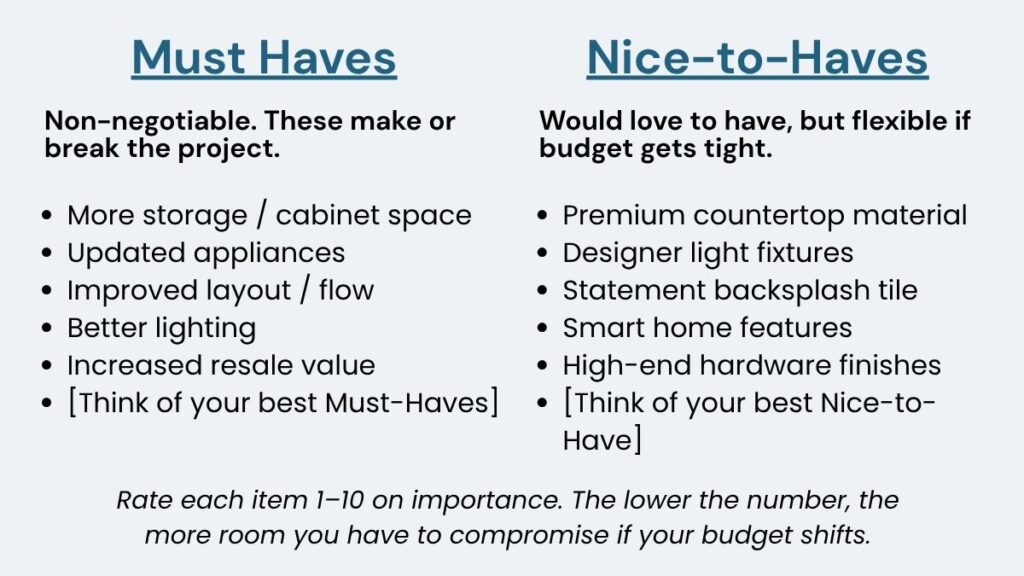
Once you’ve written down why you’re doing this, make two columns titled “Must haves” and “Nice to haves.” Brainstorm with your family about everything that’s important to get out of this project. Rate each item on a scale of 1 to 10 for how important it is. Some you’ll have leniency on, and some you won’t want to budge on at all.
Here’s a list of questions for you and your family to talk through. Write down your answers.
Questions to Ask Yourself Before You Start
- What is your reason for starting this remodel (resale, comfort, etc.)?
- What are the most important features or improvements you want from this remodel?
- What is a realistic budget you have to work with?
- Are any of your “must haves” actually less important than others?
- How much remodeling do you want done on your home in the end?
- Do you need to break this project into smaller phases? If so, why?
Write down any other questions that come to mind. These answers will help you understand what your real goals are with this project, and that clarity will make certain decisions much easier later on.
Step 2: Set A Realistic Remodeling Budget
Your budget is the deciding factor in what you can actually accomplish. It shapes every part of your project, from the materials you choose to whether you break the remodel into phases, to whether you can afford to hire a professional at all.
Before you settle on a number, run your project through our Home Remodel Cost Estimator to get a realistic ballpark based on your home’s size and the scope of work.
A couple of alternates if you want a different tone:
- Not sure what a realistic budget looks like? Our Home Remodel Cost Estimator can help you get a ballpark figure in minutes.
- For a more accurate starting point, plug your project details into our Home Remodel Cost Estimator before finalizing your budget.
Home Remodel Budget Factors
What Affects the Cost of a Remodel?
Every remodel is different, so some of these won’t apply to yours while others will make up most of your cost.
- Construction and labor
- Cabinetry and storage
- Appliances and fixtures
- Layout changes
- Materials and finishes
- Permits
- Hidden costs
Home Remodel Budget Rule of Thumb
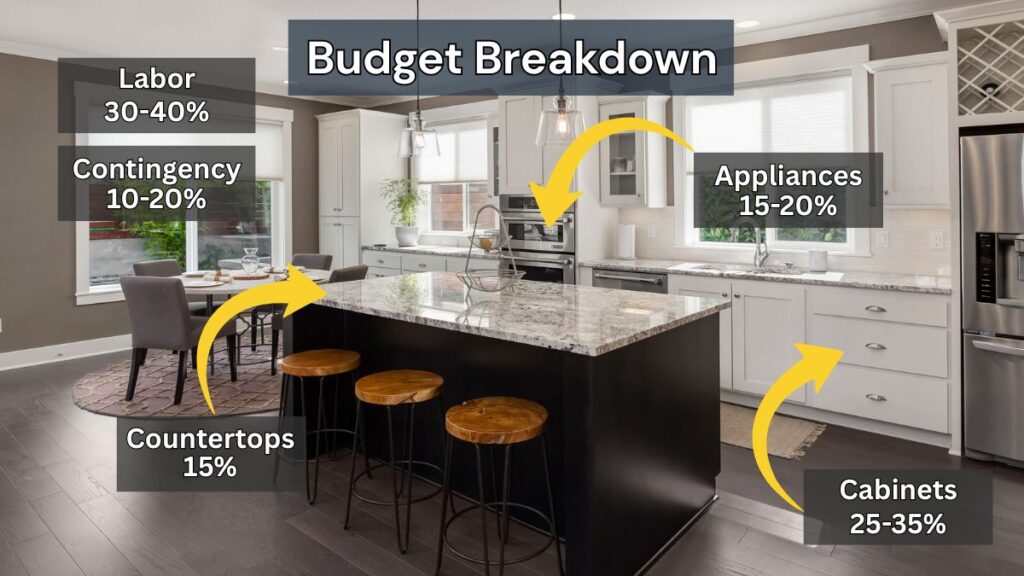
These are typical ranges for each category on its own, not numbers meant to add up to a neat 100%. Set aside a contingency fund for the unforeseen issues that come with almost every remodel. That money should only go toward things you didn’t plan for going in, like a problem that has to be solved before work can continue, or damage you find once the demo starts.
Step 3: Research and Get Inspiration

Before you start shopping, it helps to have one cohesive style in mind. There are countless materials and options out there, and narrowing down your vision early makes every decision after this one much easier.
Start your research online. Pinterest, Houzz, and design blogs are all great places to browse, and each has its own strengths depending on what you’re drawn to. Whenever you spot something you love, save it. A simple screenshot works fine so you can build a visual reference board as you go.
As You Scroll, Pay Attention To:
- The overall aesthetic you’re drawn to (modern, farmhouse, industrial, coastal)
- A color scheme that feels right for the space
- Cabinet door styles and finish options
- Countertop materials and edge profiles
- Backsplash patterns and tile choices
- Flooring types that complement the rest of the room
- Lighting styles, from pendants to under cabinet strips
- Hardware finishes for handles, knobs, and faucets
- Smart layout features like an island, pull out storage, or open shelving
Don’t stop at your screen, though. Visit showrooms in person and talk to the professionals who run them. They can be a great resource for materials, trends, and combinations you’d never come across online. If your city hosts a home remodel expo, stop by for even more inspiration. Seeing products in person and talking with vendors directly can spark ideas a webpage never would have given you.
A Few Places to Find Inspiration:
- RemodelUpgrade.com
- YouTube
- Houzz.com
Once you’ve picked your platforms, take a moment to think through the right search terms before diving in. This is a good time to revisit your notes from Step 1 and search for the items on your must have list first.
Search Term Ideas:
- Small bathroom remodel ideas
- Open concept kitchen ideas
- (Your color palette) living room ideas
This step is meant to point you toward the direction you want to take your remodel. Don’t be surprised if your plans shift once you see what’s actually out there. That’s a natural part of the process.
Step 4: Decide DIY vs Hiring a Contractor
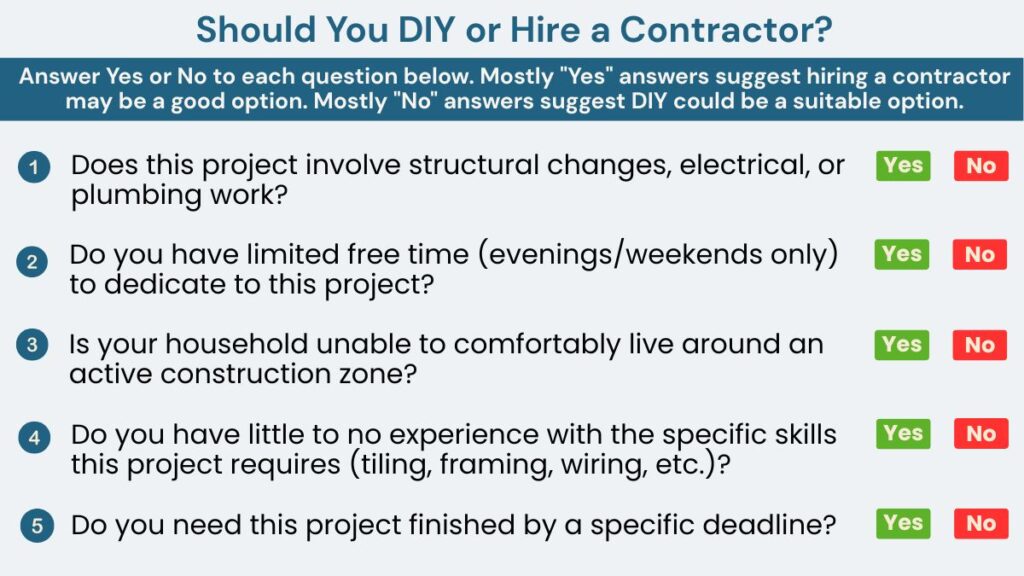
If you’re renovating a house with no experience, this is the moment to be honest with yourself about what you can realistically take on and what’s better left to a professional. Keep in mind that going the DIY route will almost certainly stretch your timeline out by days, maybe weeks.
Now think about your actual schedule. Can you realistically carve out enough hours to handle labor intensive tasks like demolition? And beyond your own time, think about your household. Is everyone prepared to live around a construction zone while you chip away at it on evenings and weekends? If you’re hesitating on any of these questions, that’s a strong sign it might be time to bring in a contractor.
Grab our free Hiring The Ideal Contractor Checklist for a step by step plan for finding the right person for the job. It walks you through everything you need to know to hire with confidence.
Even if you go the contractor route, you might still want to handle a portion of the work yourself to cut costs. That’s a conversation worth having upfront with whoever you hire. Just remember, contractors are working against their own tight schedules. A good one wants to finish efficiently so they can move on to the next job, so make sure your DIY contributions don’t create bottlenecks for them.
Step 5: Check Permits and Building Codes Early
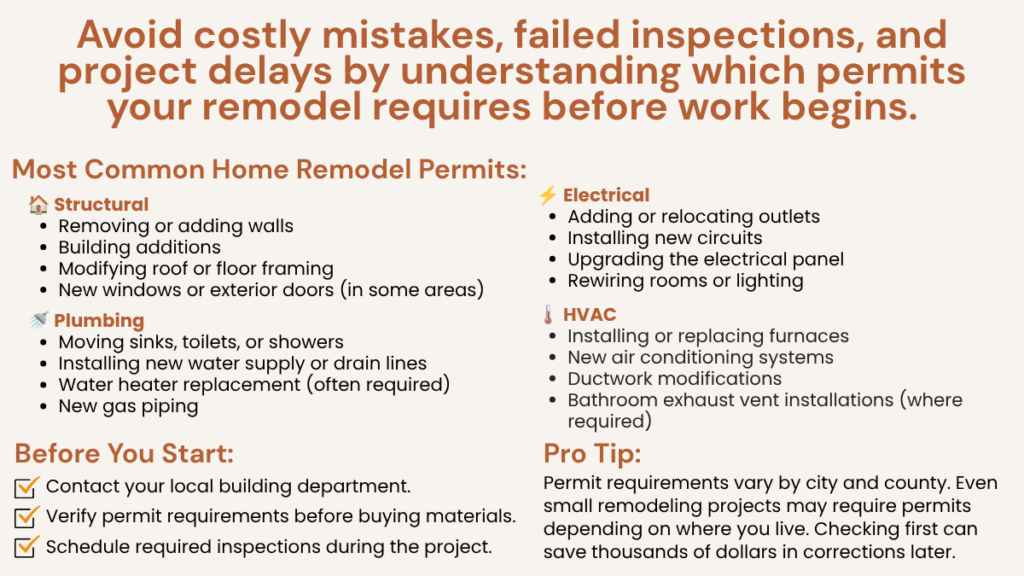
Most Common Home Remodel Permits:
- Structural changes
- Plumbing
- Electrical
- HVAC
If it’s something that could damage your house if it malfunctions, it’s worth looking into whether you need a permit.
Why Permits Matter
Permits exist to keep the building process on the right side of the law. They’re the mechanism by which hard won lessons in safety and structural soundness get baked into official requirements over time.
How To Check For Permit Requirements
To find out if your project needs a permit, contact your local building office. A quick web search for “building office in (your city)” will get you there. You may need to speak with an employee to get specifics on your particular remodel.
Step 6: Create a Remodeling Timeline
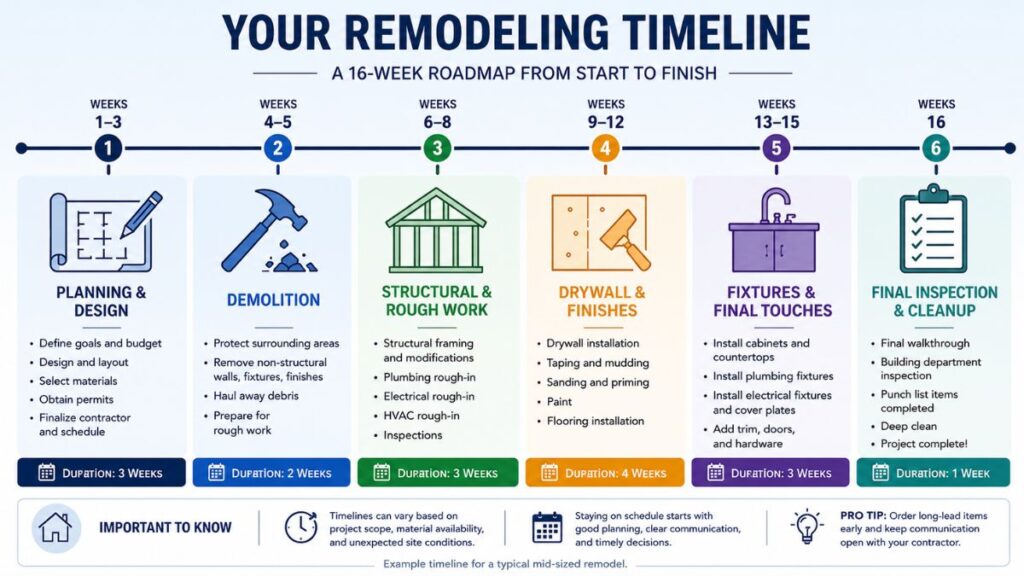
Think of this as your step by step home renovation checklist. It’s a week by week outline you can adjust as your project takes shape. A well thought out timeline shows you exactly what needs to happen and when.
Below is an example timeline to help you get started. Add your own details as you go, since your milestones will shift the timeline to give you a clearer picture of your specific project. Be as specific as possible so you fully understand what’s actually taking place at each stage.
Sample Remodel Timeline
- Define project scope, budget, and timeline
- Finalize design plans and permits
- Remove old materials, fixtures, and finishes
- Dispose of debris and prep the site
- Framing, plumbing, and electrical rough-ins
- HVAC updates and inspections
- Insulation, drywall, and paint
- Install flooring, cabinetry, and trim
- Install lighting, plumbing fixtures, and appliances
- Add hardware and final paint touch ups
- Walkthrough with contractor
- Fix punch list items and deep clean
The scope and technical level of your remodel will look different from someone else’s, and not every stage above will apply to your project. Some stages will simply take longer than others, too. Use this as a starting estimate for your own timeline. If you’re doing the work yourself, expect to run longer on several of these stages.
Step 7: Gather Estimates and Choose a Contractor
Everything up to this point has been building toward this moment. You now understand how to approach a home remodel as a beginner, and you’ve recognized that this particular project is beyond your available time or skill set. The next move is bringing a contractor on board, someone who can carry the remodel forward and see it through to completion.
Download the Hiring The Ideal Contractor Checklist to guide you through this process.
There’s a proven approach to finding, vetting, and ultimately hiring the right contractor for your home. Following it closely helps you steer clear of scammers or anyone who might leave the job unfinished. Let’s break down each stage.
Finding the Ideal Contractor
Knowing where to look is half the battle. The list below is a solid starting point, though you may need to cast a wider net depending on your area.
Where to Find Contractor Reviews and Referrals
- Ask friends and family who have gone through a remodel
- Better Business Bureau (BBB)
- Angie’s List
- Local building associations or groups on Facebook
- Yelp
What matters most here is reputation. Do the positive reviews significantly outnumber the negative ones? When you spot a bad review, does it read like an isolated incident, or does it point to a recurring problem? Trust your instincts as you narrow down who’s worth pursuing further.
Interview Potential Candidates
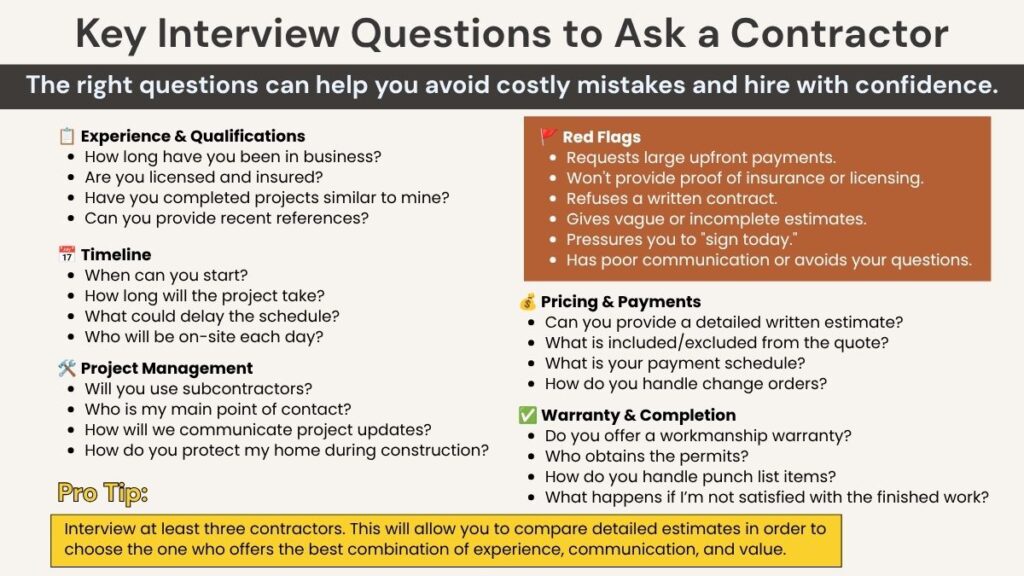
With three to five promising names in hand, it’s time to start calling. Ask each candidate the following questions to get a clearer picture of who you’d be working with.
Do you have examples of remodeling projects like mine that you’ve already done?
By this point you’ll have already described your project to them. Someone who lights up at the chance to share relevant work is a good sign. If they seem to dodge the question, take that as a warning flag.
Can you give me three references I can speak to?
Ideally these should be past clients who can speak firsthand about the experience of working with this contractor. A contractor confident in their work won’t hesitate to connect you with happy clients. Reluctance here is another red flag worth noting.
Are you licensed and insured?
This protects you if anything goes sideways during the project. Also ask whether subcontractors will be involved, and if so, confirm they carry their own insurance too.
Beyond these core questions, use this call to simply get a feel for the person. Anyone you hire will be spending time in your home, so trust matters just as much as credentials.
Hiring The Ideal Contractor
Once you’ve found the candidate who stands out above the rest, you’re ready to move forward. This final stage comes with its own set of best practices to protect both you and your property. The free Hiring The Ideal Contractor Checklist walks you through every part of this process.
Step 8: Prepare Your Home for the Remodel
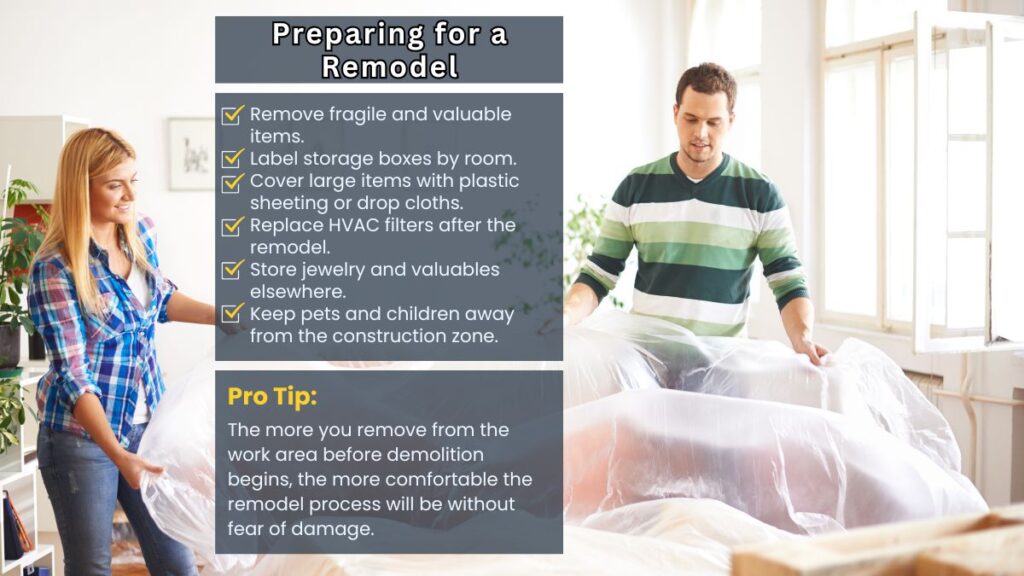
Take the steps needed to get your home ready for a remodel. This makes the process a lot more comfortable for you and your family, and it helps the construction move along without items getting damaged along the way.
Remove Household Items From The Work Zone
Clear all your household goods out of the areas that will be worked on. Box up the small items so they can be stored safely. If they’re items you use daily, keep them in a designated area or box outside the work zone.
Create A Temporary Kitchen
If it’s a kitchen remodel, you’ll need to set up a temporary kitchen for cooking. If the remodel includes plumbing work, store up water for cooking and drinking ahead of time. Five gallon buckets or jugs with a water dispenser work well for this.
Protect The Furniture
Use sheets and drop cloths to protect your furniture from dust and damage. Move pieces out of high traffic areas where people will be carrying tools and materials through regularly.
Talk to your kids about safety in a work zone. They need to stay away from dangerous power tools and sharp edges. Pets should be kept in a different part of the home if they tend to wander into the work area.
This is a temporary situation, but the whole family needs to understand it’s dangerous and should be avoided as much as possible. Safety should be everyone’s number one focus. Take whatever precautions are necessary to keep everyone safe.
Step 9: Start The Remodel, and Manage It Like a Pro
With your timeline set, a dependable contractor lined up, and your family prepared for what’s ahead, there’s nothing left to do but break ground.
Getting to the finish line takes more than just showing up, though. You’ll need to stay on top of deadlines and milestones as they come, keep a close eye on the budget from start to finish, and maintain open communication with everyone involved.
Keep a running log you can reference whenever needed. Jotting down what’s been completed at each stage gives you something concrete to point to when talking with your contractor or your family. It’s also worth snapping photos at every major milestone. Down the road those photos can come in handy, whether for insurance purposes or, someday, when you decide to sell.
Step 10: Inspect and Wrap Up
The final walkthrough is a milestone worth celebrating, but it’s also your last real chance to catch problems while a critical eye still matters. Once everything is signed off, getting a contractor to come back and fix issues becomes far more difficult.
Walk through the entire remodel slowly and thoroughly, scanning for flaws or anything that doesn’t match what was agreed upon. Bring a roll of blue painter’s tape along for this. The moment you spot an issue, mark it with a piece of tape so it’s easy for both you and the crew to locate later when it’s time for fixes.
For each flaw, jot down its exact location along with the date you found it. Once you’ve made your way through the whole space, you’ll have a complete punch list to work from, checking items off as they’re resolved.
Hold onto every piece of paperwork from the project in one dedicated folder. Permits, warranties, receipts, and contracts should all live in one place. Should any disputes ever arise down the line, including ones that end up in court, this documentation will be essential to backing up your case. Transfer your handwritten notes into this folder too, so everything lives together.
With the punch list cleared, schedule one more walkthrough with your contractor. Together you’ll confirm that every item from the previous inspection has been properly addressed and sign off accordingly. Once you’re both satisfied, make your final payment and close out the project.
Common Beginner Mistakes to Avoid
There’s an old saying: “Do as I say, not as I do.” In the context of a remodel, that means learning from other people’s missteps so you don’t have to repeat them yourself. Below are some of the most frequent mistakes first timers make during a home remodel.
Skipping the Planning Phase
Don’t get caught up in the excitement of wanting to jump right in. The thought of what your home will look like when it’s done is an enticing one, but the reality may not match what you were expecting if proper planning doesn’t happen first. Your wallet may take a hit too.
Underestimating Costs
The costs that come with a remodel can quickly become overwhelming, which is why it’s important to get an accurate read on prices before you start. If the costs are planned for, there won’t be surprises that derail your budget and catch you off guard. Looking into home remodeling ideas on a budget can help too. Smart material substitutions and phased projects let you get the look you want without blowing past your numbers.
Hiring the Cheapest Contractor
It’s easy to fall into the trap of wanting to hire the cheapest contractor, but keep in mind you’ll likely get what you pay for. With contractors, low prices often bring low quality. It’s important to pick the person who will do the job well and be honest along the way.
Not Checking Permits or Codes
Skipping this step can lead to fines, forced delays, or worse. Staying current on local codes and requirements keeps the project moving without unwanted surprises.
Changing Plans Mid Project
Once you start seeing real progress, the temptation to tweak or reimagine things kicks in. Some adjustments are fine, but every change has ripple effects. If a change order isn’t made at the right point in the project, it can mean work that’s already been done needs to be redone. That adds to your timeframe, your budget, and your stress.
Ignoring the Contingency Fund
Your contingency fund exists only to cover unexpected problems. Set that money aside from the start and resist the urge to use it for anything other than a genuine emergency.
Choosing Trendy Over Timeless
What’s fashionable right now can look dated faster than you’d expect. Look back at the 1990s, when kitchen wallpaper borders were everywhere. A few people still love that look, but it hasn’t aged nearly as well as more classic design choices.
This list isn’t exhaustive, but it should get you thinking critically before you begin, and while the project is underway. If any part of your remodel feels like a potential problem area, dig deeper into it, and don’t hesitate to lean on someone with more experience if questions come up along the way.
Frequently Asked Questions
What is the 30% rule in home remodeling?
The 30% rule suggests you shouldn’t spend more than 30% of your home’s current market value on renovations. For example, if your home is worth $400,000, you’d want to keep your total remodeling budget at or below $120,000. It’s meant to help you avoid over investing in upgrades the market won’t pay you back for when you sell. That said, this is a guideline, not a hard rule. Homeowners planning to stay long term, fixing major system issues, or renovating a fixer upper often have good reason to exceed it.
How far will $100K go in a home remodel?
It depends heavily on scope, but $100K is a solid budget for one major project or several smaller ones. It could fully cover a high end kitchen remodel, fund both a kitchen and a bathroom update with room to spare, or handle a whole house cosmetic refresh (paint, flooring, fixtures) across 1,500 to 2,500 square feet. It won’t stretch nearly as far for a full gut renovation or a project involving major structural changes, since those costs climb quickly once walls come open. As always, keep 10 to 20% in reserve for the unexpected. Older homes especially tend to reveal surprises once work begins.
Can I live in a house during a renovation?
Most home remodeling projects are fine to live through while work is underway. This is especially true for smaller projects like a single bathroom remodel when there’s another bathroom to use. Whole house renovations are a different story, since you begin losing certain amenities for extended periods and safety hazards like exposed wiring can become real issues. For larger jobs like this, it’s worth looking into a temporary relocation until it’s safe to move back in.
What is the first step in a home remodel?
The planning phase is the first, and possibly most important step in a home remodel. It’s what lines everything up so tasks get checked off on time and on budget. If you’re trying to figure out how to start a home remodel, this is where it truly begins.
How much does it cost to remodel a house?
For most homeowners, a whole house remodel runs about $15 to $60 per square foot, or roughly $19,500 to $88,000 for an average sized home (1,250 to 1,600 sq ft). Kitchens and bathrooms cost significantly more per square foot, reaching up to $100 to $250. A good rule of thumb is to build in a 10 to 20% contingency fund on top of your estimate, since surprises like outdated wiring or hidden damage are common once work begins.
Do I need a permit to remodel my house?
Permits aren’t necessary for every remodel, but a whole house remodel will typically need them. They’re mainly required for structural changes, plumbing, and electrical work, basically anything that could ruin the home if it’s done wrong.
Should I hire a contractor or DIY my remodel?
If you’re a DIY type of person and want to save money, doing the work yourself is a good option to consider. If that’s not you, or you need the project done on a quick timeframe, it’s worth looking into hiring a contractor.
How long does a home remodel take?
The answer depends on the scope of work being done. Choice of materials, contractor versus DIY, and the required skill level all factor into the timeline also.
Conclusion
Congratulations on your new home remodel project. The hardest part is simply starting something this big. Hopefully the steps in this guide help you build a strong foundation to move the project forward. Now that you know how to start a home remodel the right way, the hardest part, taking that first step, is behind you.
Download the Hiring The Ideal Contractor Checklist to keep the momentum going into your next move.
At Remodel Upgrade, we’re dedicated to helping you turn your home into your private sanctuary. Thanks for visiting.