Starting a home remodel is exciting, until you realize you have no idea how to find someone you can actually trust. This guide walks you through the process I use to find, interview, and hire the ideal contractor, while protecting yourself along the way.
I put together a free Contractor Hiring Worksheet to make this easier. It’s designed for you to work through it when going through this process of finding, interviewing, and hiring the ideal contractor. Click the link above so you can use your copy today.
Table of Contents
ToggleWhere to Begin the Contractor Search
This first step is about casting a wide net. You’re building a list of contractors who specialize in the type of work you would like to have done. You should be aiming for three to five solid candidates to move on to the next step with. Lets take a look at some of the best places to find a good contractor.
Think about anyone you know who’s had work done on their home. What did they like about the contractor? What would they change? If nobody comes to mind, a local real estate agent can often point you toward someone.
Ask Friends For Recommendations

Think about anyone you know who’s had work done on their home. What did they like about the contractor? What would they change? If nobody comes to mind, a local real estate agent can often point you toward someone.
Search Social Media

There are many groups on social media where the users are discussing the work they have done on their house. For instance, Facebook groups built around home renovation referrals can give you good clues on what homeowners in your area had done on their house. Search for groups that are local to you.
Search Terms
- Homeowners Looking for Contractors
- Remodeler Contractors
- Home Improvement Referrals
- Home Renovation and Restoration Support Group
Check Online Reviews
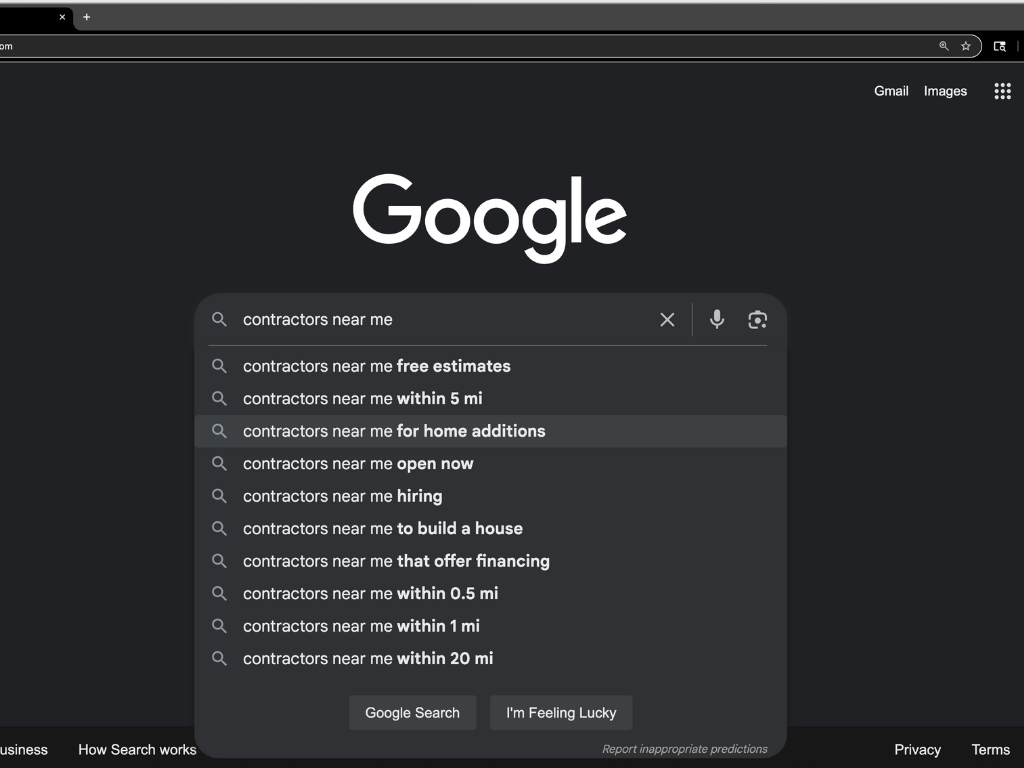
Search “contractors near me” and narrow the results to ones with a high volume of reviews and a strong rating, ideally over 50 reviews and above 4 stars.
Online Directories:
- Yelp
- Angi
- HomeAdvisor
- Houzz
- Better Business Bureau
Check Local Building Associations
Your Home Builders’ Association or Remodeling Contractors’ Association may keep a list of reputable members in your area.
Take all the time you need for this stage. You’re only choosing one contractor in the end, so it’s worth building a strong pool of candidates to pick from.
You should be aiming for 3-5 candidates to pick your ideal contractor from. Once you have them picked out, it’s time to go on to the next stage, interviewing the candidates.
Interviewing the Candidates
Have your Contractor Hiring Worksheet handy so you can take notes and compare candidates fairly. Meeting face to face is ideal, and you should meet at least once before signing anything.
Pay attention to how someone answers the questions. You want the answers to be authentic, not just what you want to hear. A contractor that’s confident in their work will portray this as they speak to you. Watch for avoiding eye contact, fidgeting, or vague answers. These are small signs that they might not be a good fit. Trust your intuition in this. Ask yourself if this is someone you want in your home for weeks or months at a time.
Contractor Red Flags to Watch For
- No written contract
- No references provided
- Pressure for a large payment upfront
- Vague or evasive answers to direct questions
- No proof of insurance
- Shows up late or misses appointments
*Any one of these alone might not be a dealbreaker, but more than one should give you pause.
Contractor Interview Questions
The interview process is possibly the most important step. When finished you should have a good idea of how good a fit each contractor is for you. The idea is to get all the information you need based on how they answer (and don’t answer) each of these questions.
Previous Experience
What made you want to get into this business initially?
Their answer here should show you where their passion lies. If someone loves what they do they will express it in this answer. Do you get the feeling the person you are talking to is looking forward to working on your home?
How long have you been in the construction business?
There is a chance they answered this question in the previous one. You want to know what amount of experience they have with your type of project. The answer to this question should be a minimum of 5-10 years in this general field of work. If you want to dig deeper on your project requirements, now can be a good time.
Do you have any examples of remodeling projects like mine you’ve already done?
Their portfolio wont have exact replicas of what you want in your bathroom, but parts of it might be represented. This can be a good place for ideas to flow for you to use. You can discover portions of their portfolio pictures you like and want to include in your design. Don’t be afraid to change your mind about some of your previous ideas if you like something they show you.
Licensing and Insurance
Are you and your subcontractors licensed and insured? Can you provide your license number?
You want to make sure they are licensed in order to protect yourself. It’s good to have their license number in your paperwork in the off chance something goes wrong.
Do you offer any warranties? What do they cover?
They don’t always need to be warranted. There is a chance your local or state regulations require them. Do a quick search to find out more.
How do you handle post-project issues/repairs?
This should be included in the contract. We will cover this in more detail in the next section called Writing The Contract.
References
Can you provide at least 3 references for your work?
These can be previous clients, other contractors they worked with, etc. They don’t need to be the same job as what your project is. You want to call them and ask how the experience was. Get a feel for what the contractor’s work ethic is like, and if the projects were on time. If someone has been doing this work for a while they should have a few references.
Timeline/Project Management
Will you provide a detailed project timeline with milestones?
This is meant to be a basic timeline for the project. Milestones are a good way to keep the project on track. We will talk about how to work them into the contract as a payment plan below.
There may be some surprises that push the time frame back. You want to know how long the contractor thinks the project will take. Find out how they will handle any unexpected issues or delays in the project. Keep the timeline in your paperwork as well.
Communication
What is your preferred method of communication?
It’s ideal to have more than one method. Something like emails for non-pressing issues and text/phone calls for something quick or urgent is nice.
How often do you provide project updates?
This is a good time to find out if the updates will be in person or another method. It’s good to have regular updates just to make sure everything is on schedule. This line of communication can give you assurance the project is on track. There may be progress being made that you can’t see when you check in.
How do you handle changes to the project scope that may affect the budget?
There are multiple reasons for changes to occur. You may change your mind along the way about something once you see it in person. This is normal but can cost more money. The contractor may make a suggestion for something to take into consideration. It’s best to get large changes in writing with a signature.
Payment
What is your payment schedule?
A typical payment schedule can be something like: an initial deposit of 10-20% up front. Progress payments of 20-30% as the project hits milestones both parties agree on. Final payment of 10-15% is paid upon completion of the project. This should be included in the contract.
Cleanup
Will you be cleaning up and disposing of the debris?
It’s good for your contractor to dispose of any debris on a regular basis. Some mess is normal during this type of work, but you don’t want to be living in excessive debris, etc for long periods of time. This will become problematic for you and your family. A good contractor will take precautions and be mindful of keeping your house dust and debris free as much as possible.
Are you willing to agree to a payment holdback until the project is completed to my satisfaction?
Ideally you won’t be using this option. It’s nice to have security by including this if possible. I also have some examples of this below.
Writing the Contract
The contract is used to protect yourself, and your home during and after this remodel. It’s also beneficial to a contractor who is honest, willing to follow the contract, and interested in doing a good job in a timely manner. Each state has different regulations surrounding these contracts, so take a look at your local laws to get a more clear understanding on what should be included in yours.
Once you’ve chosen a contractor, get everything, payment schedule, timeline, and every project detail, written into a formal contract. This protects both sides and gives you something to point back to if questions come up later. If a contractor pushes back on using a written contract, treat that as a red flag on its own.
Disclaimer:
The language below is for general informational purposes only and isn’t legal advice. Always have a licensed attorney review your contract before signing. By using this sample language, you agree that I’m not liable for losses or damages resulting from its use.
Essential Sections for a Contract
Clarity of Scope
Show exactly what work is being done. Be as specific as possible. Note any exclusions, like structural work or hidden repairs, and require written Change Orders for anything added later.
Cost and Payment Terms
State the total contract price and attach a milestone-based payment schedule. Something like a deposit at signing, progress payments tied to phases (demolition, rough-in, drywall and cabinets, countertops and flooring), and a final payment at walkthrough. Include payment terms, a late fee for overdue milestones, and how final payment and lien releases are handled.
Insurance and Liability
Confirm the contractor carries general liability insurance (commonly $1M per occurrence, $2M aggregate), workers’ compensation, and auto liability if applicable. Include a damage clause and an indemnification clause covering claims that arise from the contractor’s negligence.
Permits and Regulations
Clarify who’s responsible for pulling permits, typically the contractor unless stated otherwise. Structural changes, electrical, plumbing, HVAC, roofing, window and door replacements, and demolition often require one. Skipping a required permit can mean fines, delays, or complications if you sell later.
Timeline and Penalty
Include start and estimated completion dates, a list of excusable delays (weather, material shortages, permit delays, scope changes), and a penalty clause. A daily credit if the contractor misses the deadline without an excusable reason, plus an optional bonus for early completion is a good idea.
Warranties
A one-year warranty on labor and workmanship is standard, covering repair or replacement of defective work at no extra cost. Note standard exclusions like normal wear and tear, misuse, and pre-existing conditions, and spell out how to file a claim.
Dispute Resolution
Outline a path of good-faith negotiation first, then non-binding mediation, then binding arbitration if needed (unless the claim qualifies for small claims court instead).
Termination Clause
Define what allows either party to end the contract, non-payment, breach, poor performance, and what happens to payment for completed work if that happens.
Signatures
The most important part is the signatures. Without them, none of the above is enforceable. There should be a line for each party’s signature, with a line next to it for today’s date.
Conclusion
Hiring the right contractor can make all the difference in how your remodel goes. By planning ahead, asking the right questions, verifying credentials, and getting everything in writing, you’re setting yourself up for a smooth project and a finished space you’ll genuinely enjoy for years to come.
A remodel isn’t just a financial investment; it’s an emotional one too. Trust your instincts, do your homework, and don’t hesitate to walk away from a contractor who doesn’t feel like the right fit, no matter how good they look on paper.
You got this!