
Knowing how to plan a home remodel step-by-step is essential if you want to avoid costly mistakes, delays, and unexpected expenses during a renovation project. Many homeowners jump into renovations without a clear plan, which often leads to budget overruns, delays, and frustrating surprises. Taking time to properly prepare before construction begins can save you significant time, money, and stress throughout the project.
In this guide, you’ll learn the key steps to planning a successful home remodel, including how to define your goals, create a realistic budget, identify potential risks, and prepare for construction. Follow these steps to organize your remodel and make the entire process smoother from start to finish.
Home Remodel Decision & Planning Workbook
This guide is designed to walk you through the planning process as you read this article. Inside are simple worksheets to help you clarify your goals, organize your scope of work, and create a realistic remodeling budget. Download your free copy using the link below.
As you work through this guide, keep a notebook nearby. You’ll likely come across ideas and decisions that are worth writing down so you can refer back to them later. An important part of the planning phase of a home remodel is to make the appropriate notes to refer back to once you come across a question during your remodel.
Define Your Remodel Goals
The first step in planning your remodel is understanding why you want to remodel in the first place. There are many reasons, which can influence decisions like the types of materials you choose, and the size of your budget.
There are a few reasons that are more common than others. Your reason may be something completely different than any of them on this list. Take a look at some of the most common reasons homeowners decide to remodel their house.
Lifestyle Improvement
This is when your home is out-of-date and it’s getting annoying. Every decade has its home decor trends. Some of these may have a resurgence, making them become desirable again, but that’s typically rare.
A lifestyle improvement remodel means you are trying to update your home to meet your current style. When you are doing this, try not to rely too heavily on trendy design styles because they are likely to fall out of favor.
It’s okay for you to spend a bit extra on certain items you know you love. Keep your decision making within budget. There will be more on this topic later.
Increasing Home Value
You may be preparing to sell your home in the future, and want to get top dollar for it. Before you can do this you should boost the value by making improvements to some or all of the home. Go through your home and make note of the specifics you see that can increase the value if improved.
The areas of a home that typically increase resale value the most include the kitchen, bathrooms, and curb appeal (in that order). The kitchen is the most expensive to renovate. Bathrooms are rooms homeowners spend a significant amount of time in. The curb appeal will help buyers lean one way or another before they step foot on the property.
Fixing Functional Problems
These are issues you experience regularly that would improve your daily life if they were improved. You get stressed or annoyed by something that has to do with the current layout of your home. If it was changed it would mean your life could have less friction throughout the day.
These functional problems can also overlap with increasing your home value. If you improve some of these areas the desirability may improve for prospective buyers.
An example of a functional problem would be having a lack of storage in your home. This can be improved by adding built-in cabinets that will serve this function.
Solving these types of layout issues is often one of the biggest benefits when planning a home renovation because it improves how the home functions every day.
Modernizing Outdated Spaces
As mentioned earlier, every decade has design trends that eventually fall out of style. When design trends fade, homeowners are often left living with spaces that feel outdated or disconnected from modern styles. If you are planning on modernizing your home, decide if it’s because you want to sell, or if it’s another reason. This can dictate what finishes you choose to include in your remodel.
Questions to Ask Yourself
What problems does your home currently have?
The way a homeowner answers this question reveals a lot about the priorities and how they experience their living space. Some people focus on functional problems such as lack of storage, poor layouts, or not having enough bathrooms. This usually indicates that their remodel goals are centered around improving daily convenience and making the home work better for their lifestyle.
Others may focus more on cosmetic issues like outdated finishes, worn flooring, or older fixtures, which often suggests they want their home to feel more modern, comfortable, or visually appealing.
What improvements will have the biggest impact?
Some homeowners focus on improvements that make everyday life easier, such as expanding a kitchen, improving storage, or adding a bathroom. This typically shows that their priority is functionality and making the home work better for their lifestyle.
Others may point to visual upgrades like modern finishes, updated flooring, or new lighting, which suggests they want their home to feel newer, more comfortable, or more enjoyable to spend time in.
Is this remodel for resale or long-term living?
If the remodel is primarily for resale, the focus usually shifts toward improvements that appeal to the widest range of potential buyers. These homeowners tend to prioritize projects that increase market value, such as updating kitchens, bathrooms, and curb appeal. Their decisions are often more conservative, choosing neutral finishes and practical upgrades that help the home show well and attract strong offers.
On the other hand, a remodel intended for long-term living often reflects more personal preferences and lifestyle needs. Homeowners in this situation may prioritize comfort, functionality, and features that make their daily routines easier or more enjoyable. This could include customized layouts, additional storage, upgraded living spaces, or design choices that reflect their personal style.
Pro Tip: Write down 3–5 clear personal goals for this remodel before moving forward.
If you’re working through these questions now, this is a great time to download the Home Remodel Decision & Planning Workbook so you can go more in-depth with your remodel goals and priorities.
Define the Scope of Your Remodel
Once you understand your goals, the next step in planning a home remodel is defining the scope of work. Now it’s time to determine what your scope of work will be. This part of the process will give you a clear roadmap of all the work to be done in the project. This information is helpful for steps to come like creating a budget.
The scope of work is a detailed list of every task involved in the remodel, from demolition and structural changes to finish work and final inspections. It includes demolition, finish work, and everything in between. Take a moment to think about what this process will look like.
If you struggle with what needs to go on in this you may need to do more research online.
Here is a list of all stages that can be part of a remodel’s scope of work. Some of these may not be included in your remodel.
- Site Preparation
- Demolition
- Structural Work (if required)
- Rough-In Work
- Inspections
- Drywall & Wall Finishing
- Flooring Installation
- Cabinetry & Built-Ins
- Finish Work
- Painting & Final Surface Finishes
- Final Inspection
Example Kitchen Remodel Scope:
- Cabinets
- Countertops
- Appliances
- Lighting
- Flooring
- Plumbing fixtures
Create A Realistic Remodel Budget
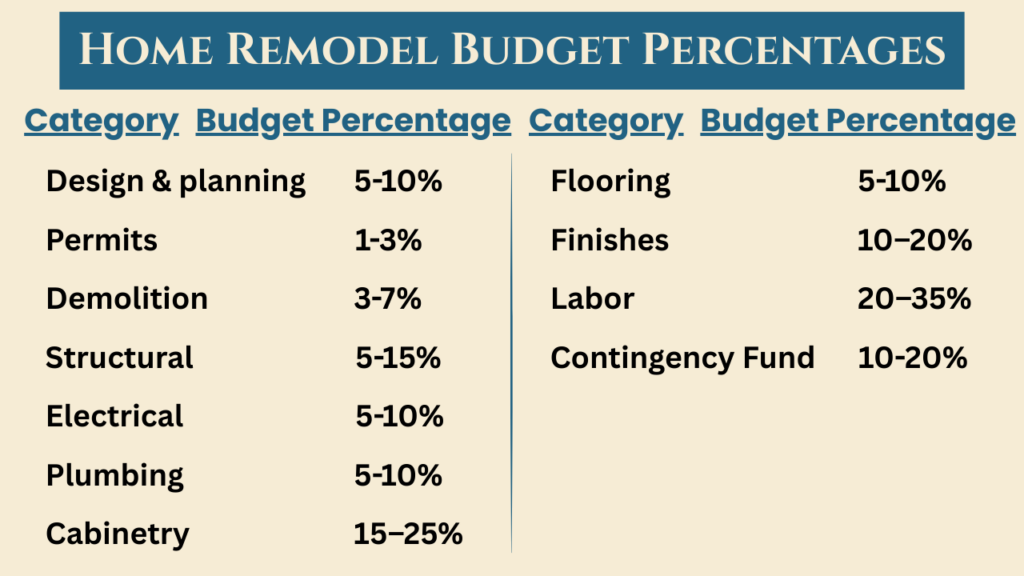
Creating a realistic home remodel budget is one of the most important parts of planning a successful renovation. This is a crucial stage you should not skip because that’s a sure way for a remodel to fail. It requires you to take an honest look at the finances you have to work with.
Many homeowners underestimate remodeling costs because they don’t account for labor, permits, and unexpected repairs. It’s easy for a remodel to go over budget, causing you to go into debt, or come to a halt completely. These types of problems are completely avoidable with the right kind of budget planning.
Start by determining the total amount you have available for the project. For an entire home’s remodel to happen you are looking at between 5-25% of the home’s value.
Remodel Budgeting Guidelines (based on home value)
5–10% → smaller remodels (bathrooms, partial kitchen updates, cosmetic upgrades)
10–15% → larger remodels (major kitchen remodel, multiple rooms, layout changes)
15–25% → full-home renovations or major structural changes
If you want to avoid budget surprises during your renovation, it’s important to understand how the planning process affects your total costs. Our guide on How to Plan a Home Remodel Without Blowing Your Budget explains how to set realistic expectations, identify hidden expenses, and structure your remodel budget before construction begins. Reviewing these strategies can help you make smarter decisions early and keep your project financially on track from start to finish.
Example Remodel Budget Breakdown
$80,000 Remodel Budget:
Design & planning → $4,000 – $8,000
Permits → $800 – $2,400
Demolition → $2,400 – $5,600
Structural → $4,000 – $12,000
Electrical → $4,000 – $8,000
Plumbing → $4,000 – $8,000
Cabinetry → $12,000 – $20,000
Flooring → $4,000 – $8,000
Finishes → $8,000 – $16,000
Labor → $16,000 – $28,000
Pro Tip: Always include a 10–20% contingency fund. Use this money to fix any unforeseen problems so it doesn’t affect your main remodel budget.
Identify Potential Risks Early
When planning a home remodel, it’s important to identify potential problems before construction begins. Some of these risks can be planned for, which helps minimize the amount you will be dealing with.
Once you know how to look for potential remodeling delays it gets easier to avoid them. It’s important to remember that delays raise your overall costs, and make more problems you must deal with. Think about these possibilities before they surprise you.
Some remodeling problems can’t be avoided. But let’s take a closer look at the ones that can. These are hidden issues that commonly happen, making it easier to prepare for them, helping you be ready when they do come up.
Structural Damage
Damage to your home’s structure can come in several forms. Some of the most common are rotting wood, cracked foundation, termite and pest damage, sagging beams and floor joists, damaged roof, and bad previous repair work.
Some of these have tell tale signs that can be distinguished by someone who knows what to look for. Much of the structural damage will be visible by things like unlevel floors, and walls that are out of plumb. If your home has large cracks in the drywall or plaster, this may be a sign of shifting subfloor or foundation.
Outdated Wiring
Outdated wiring can be a bigger project than you may realize. As improvements are made, outdated technologies are phased out. Something like adding layered lighting in a bathroom that has knob and tube wiring means new lines should be run from the breaker box. This may mean the box should be updated to allow for the additional breakers.
This type of work is best performed by licensed professionals. It can be dangerous if the right techniques are not followed. For more information on this topic, click the link to learn about the process of Hiring The Ideal Contractor.
Plumbing Issues
Anytime plumbing is modified during a remodel, there is always a possibility of encountering unexpected issues. This typically is something small like having trouble reaching in tight spaces to tighten a nut. But sometimes there may be a much bigger problem than you were expecting.
The chances of issues rising up can be reduced by having the correct tools with you before the work begins. Also only tackle plumbing jobs you know you can handle. If you don’t know what the correct process is for the work, make sure you know how to find the right information.
Permit Delays
This can be caused by something as simple as your work not passing inspection and needs to be fixed and rescheduled. A new inspection that passes needs to be completed before certain work can be done. This is a setback that can snowball by not being able to move forward with what you were expecting to get done next until the inspection is passed.
Material Lead Times
When choosing materials to use, keep the lead times in mind. Ask the supplier when your materials will arrive. Also remember to ask if they will be delivered, or if you will be picking them up. These are all factors that can dictate when the materials will be on site and ready to use.
Do It Yourself or Hire A Contractor
One of the most important decisions when planning a home renovation is deciding who will complete the work. This may seem obvious, but it’s easy to overlook aspects of the remodel that are required to be done before the next part can get started. You won’t be able to move plumbing before the walls have been opened.
This can be a moment of great opportunity for you if you are willing to take on some DIY work yourself. The most important factor to keep in mind is the work needs to be done in a professional way. Your goal is to have an end product that looks finished, and doesn’t have any major obvious problems.
Here is a list of types of work in a remodel that is a good opportunity to do yourself. Make sure you have the tools on site and ready to use before getting started.
- Painting
- Flooring
- Trim Work
These parts of the project might be better if they’re done by a professional. If you don’t know how to do these tasks, or don’t have the right tools, consider hiring a pro.
- Electrical
- Plumbing
- Structural Work
- Major Structural Upgrades
Choose areas of your remodel to DIY that match your skill level and amount of time you have to work on it. It’s okay to attempt jobs that are slightly beyond your comfort zone. But try to have a backup in mind if things don’t work out the way you intended.
Plan Your Remodel Timeline
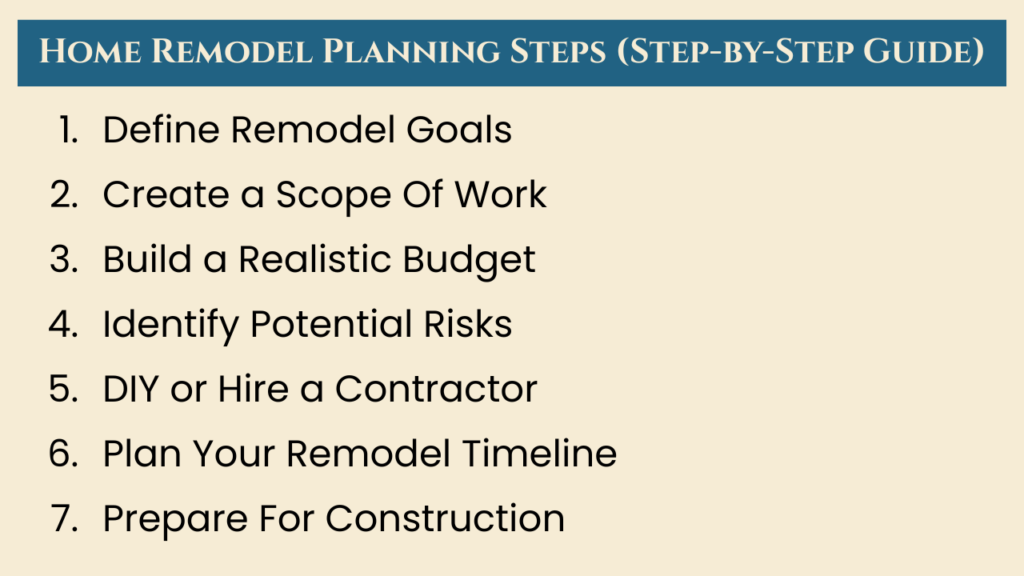
A clear timeline is essential when planning a home remodel step-by-step. It lets you know what work needs to be done and at what time. You want to have a good understanding of your timeline in order to keep the progress on track and moving in the right direction.
There are different types of remodels, and each one also has a variety of options for the amount of work that needs to be done. The timeline will vary depending on these factors as well.
Below is the average timeline for a home remodel. Yours may not have all the same stages as what you see here. Use this information to get an idea of how much time will be required for your timeline.
Typical Home Remodel Timeframe
Small remodel: 1–2 months
Medium remodel: 2–4 months
Major remodel/addition: 4–9+ months
Typical Home Remodel Timeline
- Planning & Budget (2–4 weeks)
- Design & Layout (2–6 weeks)
- Contractor Hiring (1-3 weeks)
- Permits & Ordering Materials (2–8 weeks)
- Demolition (1–7 days)
- Rough Construction (2–6 weeks)
- Finish Work (2–6 weeks)
- Final Touches & Inspection (1–2 weeks)
The most common mistake homeowners make when figuring out the timeline is underestimating the amount of time it will take. The timeline should be increased depending on how much of the work you will be doing, and the amount of experience you have.
Pro Tip: Add extra time to the timeline depending on the amount of work you will do yourself, and for your experience level. Less experience means more time should be added.
Prepare Before Construction Begins
Proper preparation will help improve the ease of your remodel, while reducing the difficulty you experience. A good guideline is to have more clarity on more aspects of a remodel. This will help with more of the project going smoothly.
Here are some of the main topics to plan for during your home remodel. Use your notepad and pencil to write down everything you know will need to be done in each of these topics.
Home Remodel Stages To Plan For
- Finalize design decisions
- Order materials early
- Prepare living arrangements
- Protect belongings
- Understand contractor communication
- Set up temporary kitchen
- Find alternative bathroom options
Adequate planning in these areas will create less confusion once construction begins. A remodel can be a chaotic process, which means the more clarity you have the less stressful it will be. Try to get a full understanding of what needs to be done for the home remodel to be completed.
Common Home Remodel Planning Mistakes
There are some areas that can cause more problems than others would in a project like this. Put more effort into finding the information for the items on this list to help reduce the amount of mistakes you experience.
Most common areas for mistakes
- starting without a clear scope
- underestimating the budget
- hiring contractors too quickly
- changing plans mid-project
- ignoring permits
Home Remodel Planning Checklist
- Defined your remodel goals
- Created a clear scope of work
- Built a realistic remodel budget
- Set aside a contingency fund
- Identify potential risks
- Decided what work will be DIY vs Contractor
- Created a remodel timeline
- Ordered important materials
Frequently Asked Questions
How far in advance should you plan a home remodel?
Most homeowners should spend at least 2–3 months planning a home remodel before construction begins.
What is the first step in planning a remodel?
The first step is defining your remodel goals and identifying what problems you want the renovation to solve. See Step 1 above for more information.
How much should a remodel cost compared to home value?
Most remodel budgets fall between 5–25% of the home’s value, depending on the size of the project.
What parts of a remodel can be DIY?
Painting, trim work, and some flooring projects can often be DIY, while electrical, plumbing, and structural work are usually best left to professionals.
Helpful Resources for Planning Your Remodel
If you’re preparing for a renovation, these guides can help you plan each stage of the process:
- How to Create a Realistic Remodel Budget
- Hiring the Ideal Contractor
- Home Remodel Decision & Planning Workbook
- How to Plan A Remodel on a Budget
- Common Structural Problems Found During Renovations
Conclusion
The level of planning and preparation for your home remodel will help dictate the number of problems you will avoid. Take the time to give your home remodel project the best chances possible by going through the right amount of planning before you begin.
This will also give you a clear idea of what to expect and what decisions to make. If you do the right amount of planning ahead of time, your remodel will have few problems and stay on time as much as possible.
Thanks for reading this article at Remodel Upgrade. Here we are dedicated to helping you turn your home into your own private sanctuary. We do that by sharing with you the best tips and tools to make the home remodel process as seamless as possible.
Before starting your project, download the Home Remodel Decision & Planning Workbook. This will help you organize your goals, scope, and budget in one place.
If you have any questions or comments please leave them below. They help us know what types of topics to make future articles about. We will answer the comments as soon as possible.
You got this,
Kevin

Kevin
I grew up in a family where my dad and several uncles were general contractors. They took me to the jobsites, and also taught me so much about home maintenance. I remember spending several summers in high school helping my father build houses. It gave me so much knowledge that I am excited to share!