
Most homeowners don’t overspend because they chose expensive finishes. They overspend because they started their remodel without a clear plan in mind. If you’re wondering how to plan a home remodel without blowing your budget, the answer is found before construction ever begins.
Not doing the preparation you are about to learn can lead to costly problems and increased timelines. That’s because areas like scope, spending limits, and long-term goals haven’t been clearly defined.
The planning stage is often overlooked, but it’s the most important part of the project. A solid plan gives you clarity on your goals, financial boundaries, and decisions before a single dollar is spent.
When this step is skipped, budgets spiral, upgrades pile on, and projects can stall halfway through due to lack of funds.
There’s good news though. A few intentional planning steps can dramatically reduce your risk. It’s not difficult as long as you know what to do. Keep reading to get a clear understanding of the full process.
Have a notepad and pencil with you as you read through this. There will be things for you to write down that will help with your planning. In fact it’s a good idea to keep the same notepad to use for your entire remodel. This will help make sure everything stays on track, and all questions get answered.
As you read, write down:
Your remodel idea or project type
The room(s) involved
Your initial rough budget guess
Any concerns you already have
The Reality Check
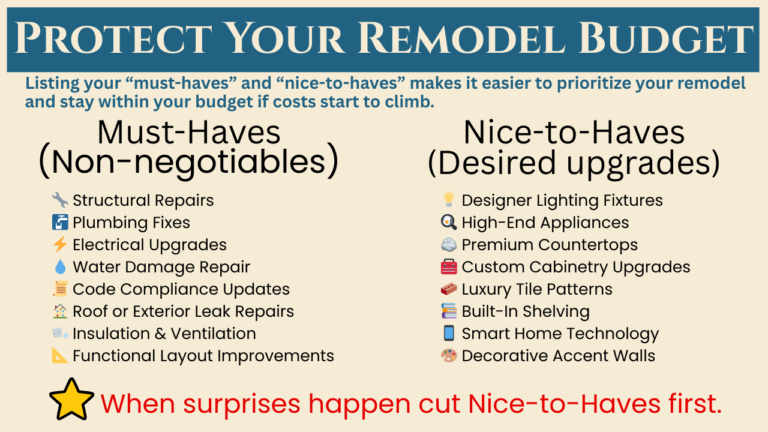
In this section, take notes on:
Your must-have features
Your nice-to-have upgrades
Possible surprises your home might hide
Areas where you might substitute cheaper materials if needed
A rough contingency percentage
It’s no surprise that every remodel comes with its own set of surprises. These can be small things you don’t pay much attention to, like a wall that’s not perfectly straight you’re installing cabinets on. Or it can be something big like finding dry rot or termites.
The key isn’t to ignore these surprises when you find them. Instead you want to plan for them ahead of time. There are a few ways to make sure you cover all your steps in the remodel, and have the safest and least stressful experience possible.
Setting up a contingency fund will give you a substantial buffer when surprises come up. This is a pool of money that is set aside and only touched when you encounter issues that could not be expected. More on how to determine the size of this fund a bit later.
Another way to save money in a remodel that’s approaching maximum budget level is to substitute certain items that are pricey with a more affordable option. This is why you should set up a “must-haves” and “nice-to-haves” list. You will know the best way to do this later in the article as well.
Plan Your Remodel With the Home Remodel Decision & Planning Workbook
The number of decisions in a remodel is an overwhelming feeling. Some of the harder ones include budget limits, scope of work, contractor choices, and unexpected costs. Just thinking about them turns what should be a fun project into a stressful one.
That’s why I created The Home Remodel Decision & Planning Workbook.
This free workbook guides you through the same planning process that the pros use before starting a new remodel.
Don’t try to keep every decision in your head and expect the remodel process to go smoothly.
This workbook will help you work through a structured set of exercises that keep you organized. It makes sure you will be making confident decisions before spending any money.
Inside the workbook, you will:
• Clearly define your remodel goals and the reason you want to start this project.
• Create your scope of work so you have a clear understanding of every step involved in the remodel.
• Identify budget risks early so they have minimal impact on your project.
• Get a DIY vs Contractor evaluation tool to help decide who should handle each part of the job
This is the first tool you should use to create a clear roadmap for your remodel and gain a better understanding of your budget, risks, and priorities.
Download the free workbook and start planning your remodel with confidence.
Get Clear on Your Real Goal
In this section, write down:
The main problem your remodel solves
What success looks like when the project is finished
Whether the remodel is a need, want, or reaction
How long you plan to live in the home
Your comfortable spending limit
What would make the remodel feel like a mistake
Write down your scope of work:
Rooms involved
Layout changes
Plumbing relocation
Electrical upgrades
Structural changes
Cabinetry or built-ins
Finish work (paint, trim, flooring)
The first step for coming up with a substantial remodeling plan is to set clear goals. Start by defining what your reason for this remodel is. Write down your reason in order to help translate your feelings into words.
One reason for going through a home remodel is to improve the resale value of your house. Or maybe you don’t like the functionality of the room and want to make improvements in this area.
This process helps you put into words what specifically you want to change with the remodel. When it’s time to purchase materials you will have a better idea of what direction you want to go in. This reduces the number of change orders mid project, which may cost you time and money.
Ask Yourself These Questions:
What problem am I solving with this remodel?
Is this about resale value, storage, layout, or something else? Be specific with this part. “I want it to look better” isn’t a good enough answer.
What does success look like when this project is finished?
Can you describe the outcome in a simple way? Think about why you and your family decided to take on this endeavor in the first place.
Is this a need, a want, or a reaction?
Are you fixing something in your house that doesn’t work? Or could it be that you saw something inspirational that you can’t live without?
How long do I plan on living in this home?
If this is your forever home then choose finishes you love. If it’s an investment home then pick options that are timeless and popular. This helps with maximum appeal.
What is my comfortable spending limit?
There’s a big difference between what you can spend and what you’ll feel good about spending. Don’t forget about a contingency fund.
The next thing after you have these questions answered is to define your scope of work. This would be all the specifics that go into the project. Some things that fall into this category are layout changes, plumbing relocation, electrical upgrades, and structural changes.
Start with demolition, and then focus on what needs to be done inside the walls. After that’s through it’s time for drywall, paint, cabinetry/built-ins, and then finish work.
Be as specific as possible with this step. It’s useful to know what order the work gets done in when you are doing the work.
If you have a hard time visualizing what needs to be done, check out the beginner’s guide to starting a remodel.
Understand the 5 Biggest Budget Killers
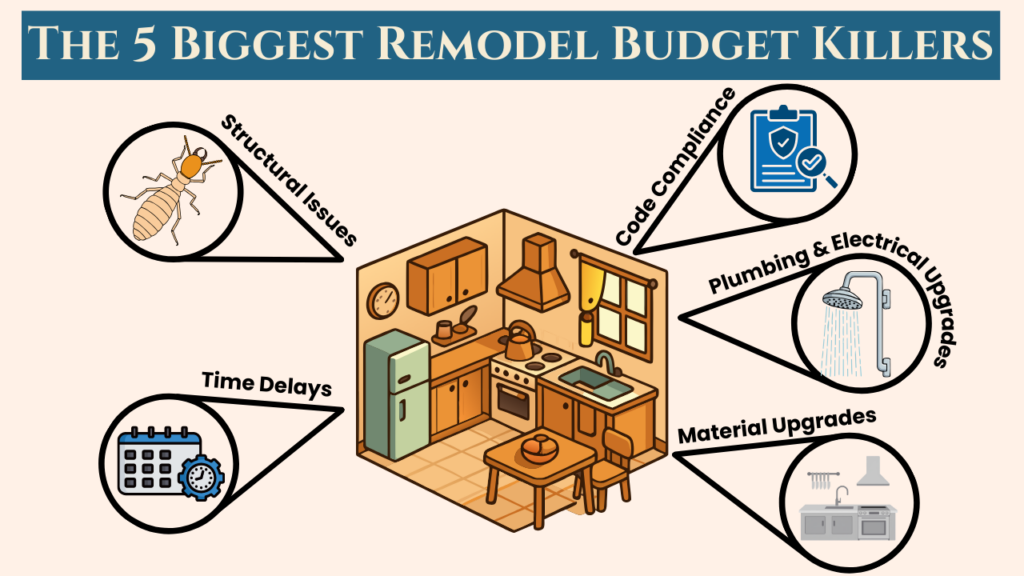
As you read, note any risks that may apply to your project:
Structural issues
Permit requirements
Plumbing upgrades
Electrical upgrades
Mid-project material upgrades
Possible timeline delays
This type of home remodel project will likely include hidden costs. It’s best to get out in front of them and plan accordingly. If you know what you are looking for, it’s easier to make good decisions that help avoid these budget killers.
Structural Surprises
It’s common to run into structural surprises when the walls get opened up. Problems like dry rot, termites, or poor previous repairs are things that should be addressed once you notice them.
These can be costly repairs, but must be addressed. They are unexpected, so all the money going towards it was not factored into the budget. It’s also upsetting to know you put all that money into something that’s going to be hidden back up inside the walls. The good news is you can sleep assured the home is structurally sound again.
Code Compliance Issues
There are a few areas that could possibly require permits in order to do work. These requirements may vary depending on the regulations in your city or county. The most common areas to require permits are structural changes, major plumbing changes, and major electrical changes.
Type into a search engine “[Your City/County] [State] residential building permit requirements” to check.
Plumbing & Electrical Upgrades
These categories require people who know what they are doing. Both plumbing and electrical work have potential to cause huge problems when done wrong. If you don’t know much about these topics, consult a trusted professional to do the work for you.
Read more on this topic at DIY vs contractor decision guide.
Material Upgrades Mid-project
These types of upgrades can add to the budget quickly. Going into the remodel you want to have a list of the materials to use. This should be considered before you get started. This will let you know what budget you have to work with.
It’s okay to make changes as long as it fits into the budget. Don’t make too many upgrades along the way because it can derail your remodel’s budget.
Timeline Delays
There are so many ways to run into timeline delays. Sometimes they are out of your control. It could be something like the contractor running behind schedule, or an unforeseen weather event that makes it hard to purchase materials.
Prepare yourself as much as possible ahead of time for these types of issues. Most of the time you can handle these delays with proper planning. This will help keep your remodel on schedule and within budget.
Create a Realistic Budget Range
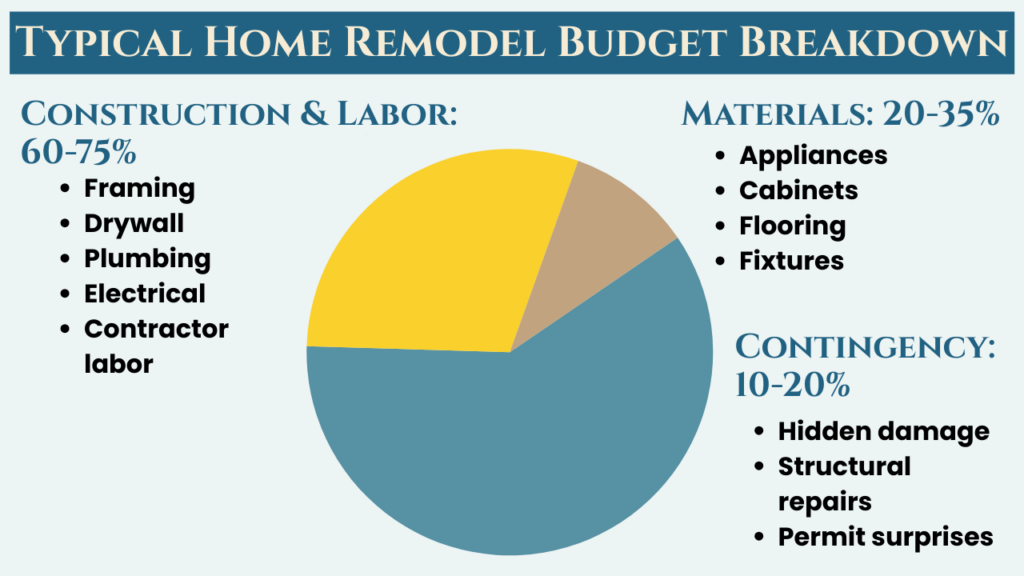
Write down your estimated budget breakdown:
Labor and construction costs
Materials budget
Permit costs
Dumpster / disposal
Tool purchases or rentals
Contingency fund amount
The most accurate way to budget is to break the remodel into categories (demolition, framing, plumbing, electrical, finishes, labor, permits) and price each one individually.
Make sure your budget is realistic. Below are all the major categories that fall into finding what your budget is. Once you understand how to locate an accurate figure, find yours and write it down.
Construction and Labor
Construction and labor can take up to 60-75% of your total project cost. If you choose to do the work yourself this figure will be much smaller. The tradeoff is with the amount of time you spend working on your house.
If your project has major work being done you should consider hiring a contractor. These include: structural, plumbing, electrical, HVAC, framing, and drywall. Hiring a professional can save the project time while giving a professional looking result.
Materials
Materials usually take approximately 20–35% of total cost. This can vary based on factors like prices in your location. These are what you will be using on the remodel. Take a look at your “must-have” and “nice-to-have” lists before shopping. You may be seeing items at the store you like more than what you already chose. The lists will help you make a choice in this situation that will keep the project within budget.
You have the most control of this category, as long as you don’t make a lot of last minute changes to your decisions.
Contingency
Every remodel has the potential for something unforeseen to go wrong. This doesn’t mean it always will, but if it does you want to be ready. The contingency fund is often overlooked, but can possibly save your remodel from a total disaster.
Plan for a contingency of 15-20% of your overall budget amount. You may not need to use it all, but it’s good to have it if you need it.
Under budgeting your project’s total cost amount is easy to do. This happens when the obvious parts are accounted for, but not the less noticed areas. You can avoid this by going back to the scope of work you created earlier and look at each item in that list. It might not be easy to estimate an amount, so in this situation search online for the closest option in your location.
Decide DIY vs Contractor Before You Start
Write down your answers for each category:
Which parts you will DIY
Which parts require a licensed contractor
Tools you already own
Tools you need to buy or rent
Time you realistically have available
There are many parts of a remodel that even someone with little experience and the desire to learn can do a good job in. There are other aspects that should only be attempted by someone with experience.
You can only grow by attempting something that you haven’t done before. Every professional once didn’t know how to do the work they are experts at now. There are a few things to consider before making the decision on whether or not to hire a contractor.
Your Skill Level
Do you have the skillset to do a decent job at what you are attempting? You don’t need to have done it in the past, just willing to learn the right technique, and have access to the right tools.
Your Tool Box
You can only do work as good as what your tools allow. That means you want to have the right tools for whatever you’re working on. If you don’t own them, are you able to rent or borrow them?
Time Availability
We all know life is still happening alongside the remodel. You want to ask yourself if you have the amount of time and energy available to get the job done. Doing this work yourself will inevitably push back the timeline. That’s because if you don’t have the same skillset as a professional you will require more time to work on it.
Resale Value
If this work is to increase the home’s resale value, you want to make sure the final product looks great. Keep this in mind when deciding if you will be doing some or all the work yourself.
Make The Decision to Remodel
Use this section to evaluate if you’re ready to move forward:
Maximum budget you can safely afford
Whether a 15–20% cost increase is manageable
Whether the project will require financing
Whether the project will cause financial stress
Whether the remodel improves functionality, safety, or resale
At some point, the planning phase has done everything it can. This is after you have researched all the categories, estimated the costs, and included the contingency.
Now you have to answer one important question:
Should we move forward, or do we wait?
This is the most important decision to make for your remodel. Let’s look closer at the different scenarios to get you the right answer.
Stress-Test the Budget
Before saying “go ahead with the remodel,” ask yourself these questions:
If the project costs 15–20% more, can we absorb it?
Will this drain our emergency savings?
Are we financing the project? If so, is the monthly payment comfortable?
Will this project create financial tension at home?
If the answer to any of these questions make you uncomfortable, that’s something you should pay attention to. A remodel should improve your life, not create ongoing stress. This process doesn’t need to be an uncomfortable one.
Postponing a project like this doesn’t need to be forever. In fact the planning phase is just as important as the building phase. There is work for you to do in getting your budget in order, sourcing materials you love, and finding an ideal contractor before the first swing of a hammer.
Clarify The Why
Ask yourself why you are going through this remodel. Look deeply at what the true answer to this question is. Here are a few questions to help you do this:
Does the space currently have good functionality?
Are you preparing to sell the house?
Are there safety or structural issues that you know of?
Are you just tired of how it looks?
If the reasons for your decision to do this remodel are functionality or safety reasons, that’s a stronger justification to move forward quickly. Purely aesthetic projects can wait until all the planning and financing is in place.
Evaluate the Return on Investment (ROI)
A return on your investment can come in two different forms. The first is a financial ROI where your home asset gains a monetary value as the remodel is completed. You can sell the home for more than what it was previously worth because of the increased value you have added.
The second type of ROI you may experience is that of a lifestyle improvement. This is what you and your family experience every time you use the upgraded space. It may be reducing levels of frustration or stress, or increasing your comfort levels.
Either of these can be valid reasons for going through a home remodel. Remember that the home remodel will be done at some point, and this is more easily obtained through thoughtful planning and preparation.
Consider The Timing
Write down factors affecting your timing:
Current home issues that need urgent repair
Upcoming financial changes
Work or family schedule considerations
Ideal start time for the project
The right timing is crucial for your remodel to be a success. Going into this type of endeavor when you aren’t ready may mean the outcome won’t be as good as it can. There are a few factors to consider when it comes to the timing of a home remodel project.
The first thing to think of is if there is damage taking place in the home. Consider the areas that are falling apart and need to be repaired sooner than later. These could be the roof, exterior siding, and around windows to name a few.
Another situation is if your household income will be changing soon. A promotion you may be expecting next year can make it much easier for you to budget for the remodel. It may be a good idea to delay the remodel until then.
The timing of the project can be something that either helps or hurts your remodel endeavor. Use this to your advantage when making your decisions.
Make A Choice With Confidence
Your Remodel Planning Summary
Quickly summarize your notes:
Remodel goal: ______
Scope of work: ______
Estimated budget: ______
DIY vs contractor plan: ______
Contingency amount: ______
Go / No-Go decision: ______
Want a structured version of this process?
Download the Home Remodel Decision & Planning Workbook.
After considering all the aspects listed above, it boils down to you making a decision and sticking to it. Get everything in place as good as possible before you begin the work.
A delay in starting the project can be something you use to your advantage. This can give you time to create a detailed scope of work, make sure you have the tools you need on hand, and even begin purchasing the materials.
It’s okay to delay the start of the project if you need to. This doesn’t mean you will not be doing the remodel at all. It just means it won’t be starting right away.
Frequently Asked Questions
How much should I budget for a home remodel?
A good starting point is 10%–20% of your home’s value for a full remodel.
Specific project costs:
- Kitchen remodel: $15,000–$75,000+
- Bathroom remodel: $8,000–$35,000+
- Whole home remodel: $50,000–$200,000+
Your final number depends on the scope of work, amount of structural changes, quality of materials used, labor, and the age of your home. The location you live in can also be a factor.
What is the biggest mistake homeowners make when budgeting?
The biggest mistake is underestimating hidden costs. Many homeowners plan only for visible upgrades (cabinets, tile, flooring) and forget about things like electrical upgrades, plumbing relocation, structural repairs, permit costs, and temporary housing.
These are reasons why remodels often go over budget. When you build a financial plan it’s best to account for both visible and invisible costs.
How much contingency should I add to my remodel budget?
A good way to think about contingency has to do with the magnitude of your remodel. If it’s a basic remodel, around 10% of the overall budget is a good option. Medium to high level remodels can be around 15-20%.
The contingency is also dependent on the age of the home. Older homes are more likely to hide issues that come up once work is done. A home that was built before 1980 will need a contingency on the higher end of 15-20%.
Why do remodels go over budget?
Remodels typically go over budget because of things like changes made after construction begins, unseen damage that needs repair, or underestimating labor costs. Homeowners that upgrade materials mid project can drive the budget up. Also having poor communication with the contractor may make problems that cost extra to solve.
Is it cheaper to remodel room by room?
Remodeling in phases can help with budgeting because you will be saving up the amount you need and starting on that phase when ready. This is helpful if you are doing the work yourself, or are low on funds and need to save first.
It is more expensive in the long run because it costs more to hire labor multiple times, or rent dumpsters to throw the demolition into. You will also be disrupting your lifestyle for a longer period of time.
Conclusion: Planning Is the Real Remodel
The most important part of a good remodel is to go through the proper planning ahead of time. Make sure you have your budget in place, your scope of work is determined, and your labor is ready.
It may mean you need to delay starting the job in order to get some of the important items ready. Take these steps to make sure your home remodel project is done right and with minimal issues. This will set you up for success in the long run.
Thank you for reading this article. Please leave a comment below if you have any questions or comments about this topic. I appreciate hearing from you. Click on similar articles to go deeper on this topic and more.
You got this,
Kevin

Kevin
I grew up in a family where my dad and several uncles were general contractors. They took me to the jobsites, and also taught me so much about home maintenance. I remember spending several summers in high school helping my father build houses. It gave me so much knowledge that I am excited to share!