
Table of Contents
ToggleRemodel Cost Calculator
Estimate your project cost based on size, quality, and labor approach.
How Your Estimate Is Calculated
The calculator uses a simple formula based on the inputs you choose. Each selection directly impacts your final estimate, and each section below has several variables that can shift your total in meaningful ways.
Project Type (Cost Per Square Foot)
Quality Level (Material Impact)
Your material selection adjusts the total cost. Mid range to luxury materials generally deliver more long term value.
Labor Type (DIY vs Contractor)
Labor is one of the biggest cost variables for any home remodel. Taking on work yourself can reduce costs, but it may increase both time and risk.
Final Estimate Range
The calculator provides a range based on typical project variation. This helps account for unexpected costs and real world variability.
What to Consider With Your Remodel
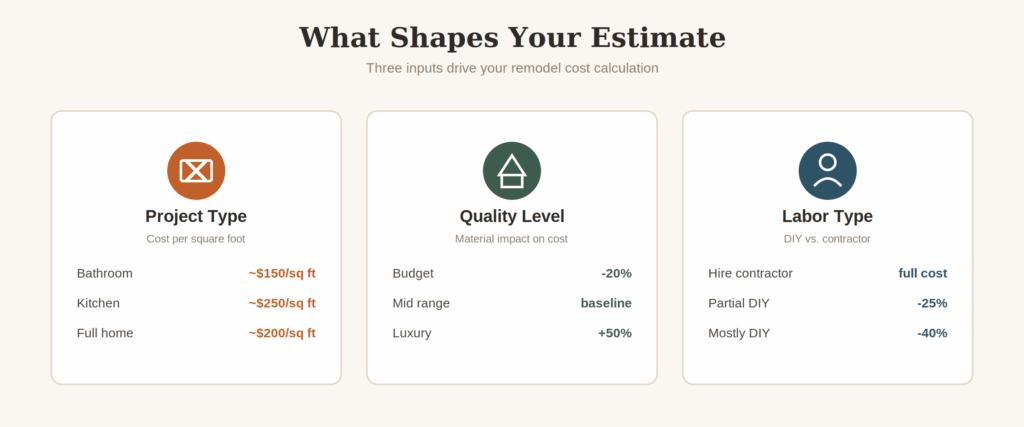
Every remodel is different. The room you’re renovating plays a major role in how much your project will cost. Factors like layout changes, materials, and labor complexity all affect where your budget ultimately lands.
To understand the full breakdown, check out our guide on Average Cost to Remodel a House.
Project Type (Cost Per Square Foot)
Typical Remodel Cost Ranges
| Project Type | Typical Cost Range |
|---|---|
| Bathroom remodel | $8,000 to $30,000+ |
| Kitchen remodel | $15,000 to $75,000+ |
| Full home remodel | $50,000 to $200,000+ |
These ranges can vary significantly depending on the size of your home, material quality, and the scope of work.
What to Consider With Your Remodel
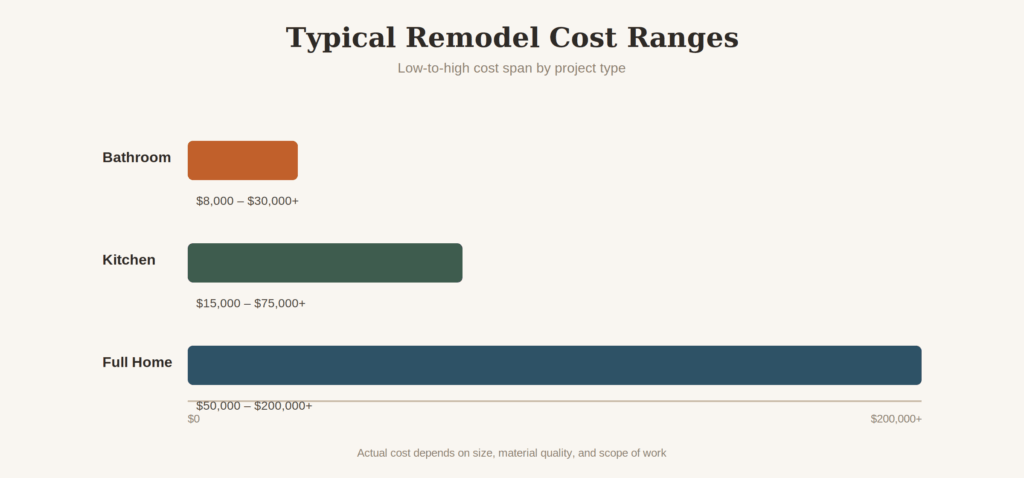
Every remodel is different. The room you’re renovating plays a major role in how much your project will cost. Factors like layout changes, materials, and labor complexity all impact where your budget will fall.
To understand the full breakdown, check out our guide on Average Cost to Remodel a House.
Typical Remodel Cost Ranges
| Project Type | Typical Cost Range |
|---|---|
| Bathroom remodel | $8,000 to $30,000+ |
| Kitchen remodel | $15,000 to $75,000+ |
| Full home remodel | $50,000 to $200,000+ |
These ranges can vary significantly depending on the size of your home, material quality, and the scope of work.
Cost Per Square Foot Explained
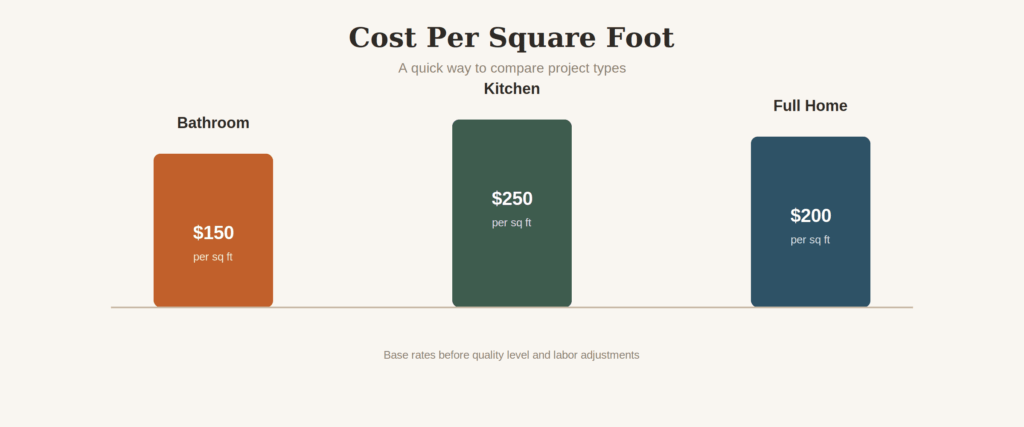
A simple way to estimate the cost of a remodel is by looking at the cost per square foot. This gives you an easy way to understand an average amount and compare different types of projects.
One of the biggest factors that affects your budget is the quality of materials you choose. Typically, these fall into three categories: budget, mid-range, and luxury. The higher the quality, the more your remodel will cost. In addition to cost, it can also increase durability, style, and long-term value.
Many contractors prefer using cost per square foot to bid a project because it’s an accurate way to see how much a remodel will cost. This gives them an idea of what the cost of a remodel would be based on the project size, instead of calculating every detail.
This method allows you to quickly compare options, making it easier to decide what type of remodel you want to go through with. At a glance you can look at the price per square foot for each project type to see which one fits your budget.
It also combines labor and materials into one price. This is helpful when using a contractor for your project. But if you are doing the work yourself you may be able to allocate some of the funds elsewhere.
The cost per square foot is a helpful way to get an understanding for what type of remodel you can afford. Use this as a tool to understand what you are comfortable with, and to communicate project needs with a contractor.
While it’s not a final quote, cost per square foot is one of the best ways to ballpark your remodel budget early on. The calculator above is designed to help you do this quickly and with accuracy.
What Affects Remodel Costs?
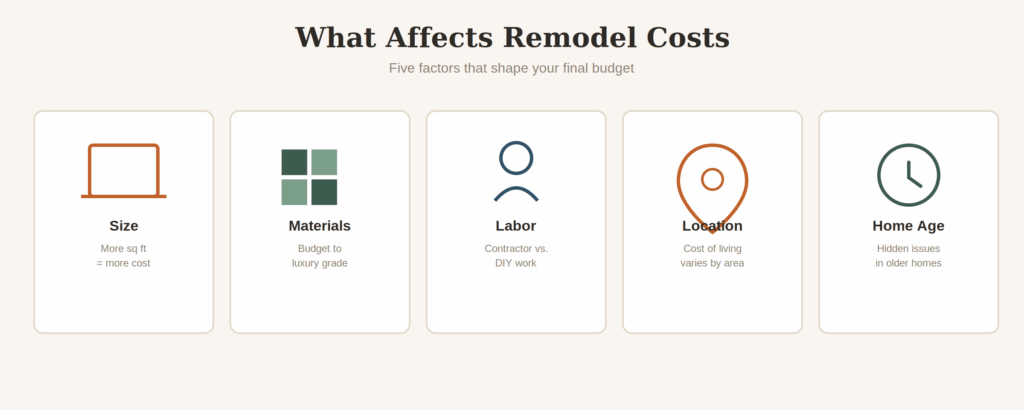
How much a home remodel costs is dependent on several major factors. Your goal is to know what affects your budget, and avoid unexpected costs.
Size of the Project
The biggest cost factor in a home remodel may be the overall size of your project. If you are working on a large remodel, you will need more labor, time, and materials. The same goes for remodeling multiple rooms, or increasing your home’s size. These all come with higher cost requirements than other more basic remodels.
Material Quality
Your choice of materials can drive up your required budget. There are ways to find budget friendly materials to help keep costs low. These are generally lower quality, but it’s possible to sometimes find quality materials at decent prices. Mid-range and luxury materials are going to drive up costs, but last longer and hold up to wear and tear better.
Labor Costs
Labor can be the largest percentage of a remodeling budget. A complex project requires more skilled laborers to be involved. A more straightforward remodel will allow you to do the work yourself if you have the tools and time, driving down labor costs. You can then in turn allocate those funds elsewhere.
Location
Remodeling costs can also be dictated by the location of your home. If the cost of living is high, that translates to higher cost of materials, permit fees, and labor. The opposite is generally true for lower cost of living locations.
Age of the Home (Hidden Issues)
Believe it or not, the age of your home can drive up the cost of your remodel as well. If your home was built before 1980 you want to be cautious of hidden issues. Some examples are asbestos, lead paint, and knob-and-tube wiring.
Remodel Cost Breakdown
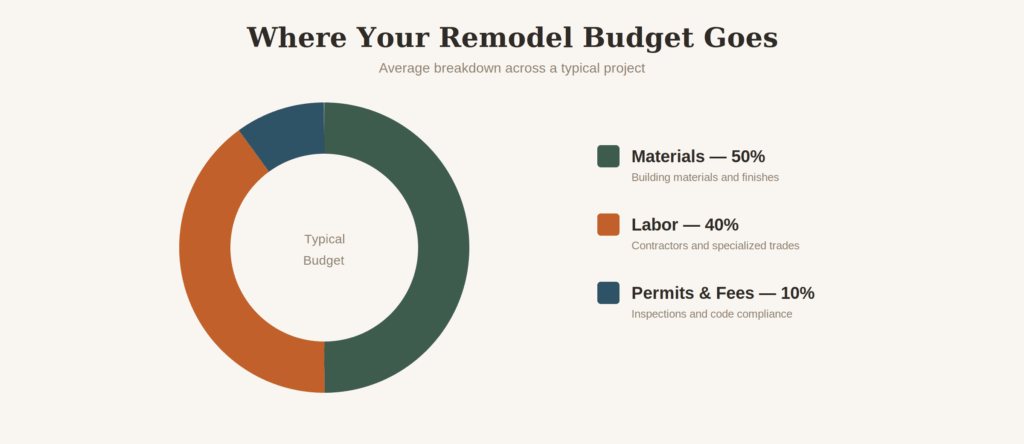
Below is a list of the breakdown for categories that affect your remodeling budget. Once you have an understanding of where your money is going, you can plan more accurately, and make smart decisions throughout the course of your project.
Labor Cost (~40%)
Labor can be a major portion of a remodeling budget. This category includes contractors and specialized trades. More specialized aspects in your remodel can drive up your labor cost. This includes changing the floor plan and moving plumbing or electrical. Typically kitchens and bathrooms have the highest labor costs.
Material Cost (~50%)
Materials are the largest part of the budget. This includes all the building materials like sheetrock and flooring, as well as the finishes like faucets and moulding. The choices you make within this section can be a huge factor for how much you will be spending.
Permits & Fees (~10%)
Not all remodels require permits or inspections. Remodels that should take this into consideration are ones that have major plumbing work, electrical work, and structural changes. Permits make sure your remodel meets code requirements. The fees for this category are dependent on your location and the scope of work.
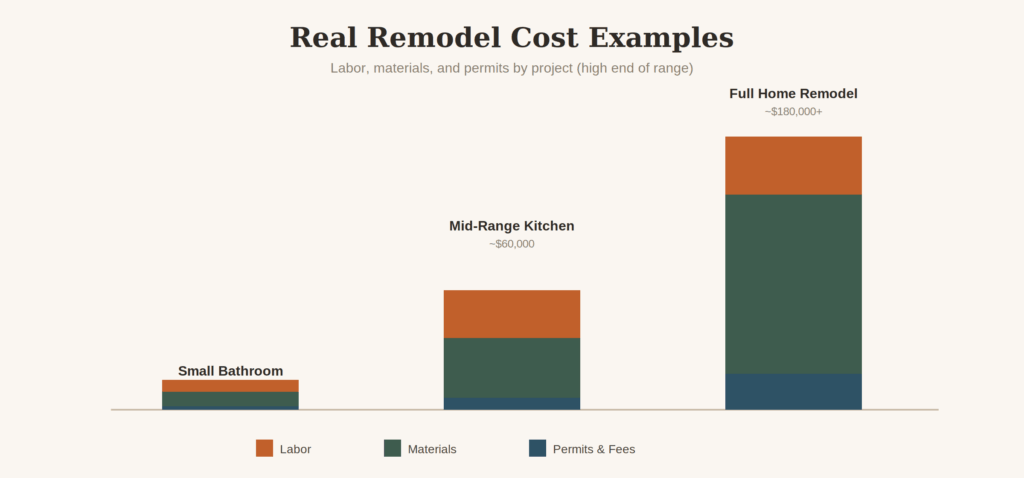
Real Remodel Cost Examples
| Project Type | Size (Sq Ft) | Average Cost Range | Cost Per Sq Ft* |
|---|---|---|---|
| Small Bathroom Remodel | 35 to 60 sq ft | $10,000 to $18,000 | $210 to $380 |
| Mid Range Kitchen | 120 to 250 sq ft | $30,000 to $60,000 | $160 to $325 |
| Full Home Remodel | 1,000 to 2,500+ sq ft | $80,000 to $180,000+ | $45 to $105+ |
*Cost per square foot here is calculated directly from each row’s own size and cost range, so it’s internally consistent with the numbers next to it.
How to Use This Table
Use it to quickly compare remodeling costs by project size and type, and get a realistic starting point before using the calculator above to plug in your own specifics.
Small Bathroom Remodel
A small bathroom falls between 35 and 60 sq ft, with standard fixtures, new flooring, and a simple vanity. This size and scope typically runs $10,000 to $18,000. Skipping major layout changes helps keep labor costs down.
- Labor: $4,000 to $7,200
- Materials: $5,000 to $9,000
- Permits & fees: $1,000 to $1,800
Mid Range Kitchen Remodel
A mid range kitchen falls between 120 and 250 sq ft, with semi custom cabinets, upgraded appliances, and upgraded countertops. Expect this project to land between $30,000 and $60,000, with costs climbing due to more complex trades like plumbing, electrical, and cabinetry installation.
- Labor: $12,000 to $24,000
- Materials: $15,000 to $30,000
- Permits & fees: $3,000 to $6,000
Full Home Renovation
A full home remodel spans 1,000 to 2,500+ sq ft and includes multiple rooms, system updates, and possible structural changes. Budget for $80,000 to $180,000+ here. These projects often uncover hidden issues, especially in older homes, which can push costs higher. Set aside a contingency fund of 10 to 20% of your overall budget and only use it when those hidden issues actually arise.
- Labor: $32,000 to $72,000+
- Materials: $40,000 to $90,000+
- Permits & fees: $8,000 to $18,000+
Want a more accurate estimate? These examples reflect average conditions, your actual cost will depend on your specific choices. Use the remodel cost calculator above to get a personalized estimate for your project.
How to Reduce Remodel Costs
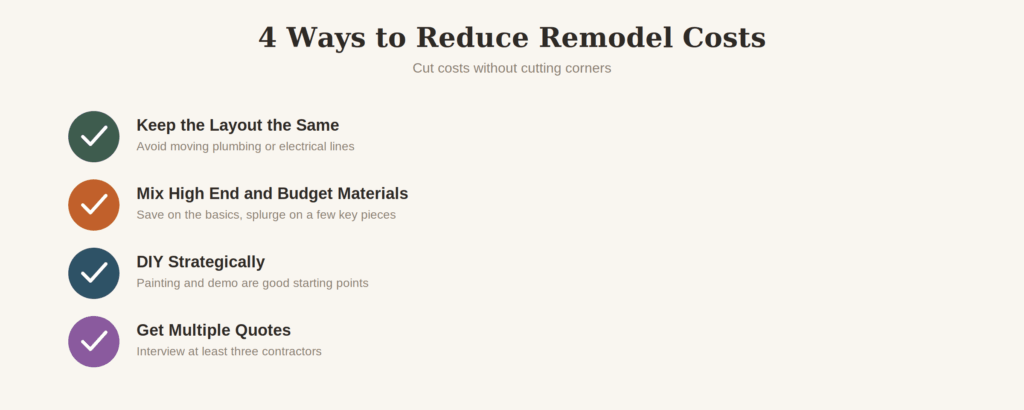
A home remodel isn’t meant to bankrupt you. The research and planning phase is meant to help you get a good grasp on your finances, so you can make adjustments as needed. Sometimes that means you need to find creative ways to reduce remodeling costs.
Keep the Layout the Same
Layout changes are one of the fastest ways to drive costs up. Moving plumbing or electrical, or changing your home’s footprint, adds expense quickly. Keeping fixtures like sinks in their current location is one of the easiest ways to hold the line on cost.
Mix High-End and Budget Materials
Plenty of attractive materials are also affordable. With a wide range of styles and colors available, you can lean on budget and mid range materials while sprinkling in a few luxury pieces, saving money while keeping a cohesive look.
DIY Strategically
Since labor is one of the highest expenses in any remodel, doing some of the work yourself is a solid way to save. Stick to projects you’re comfortable with, painting, demolition, and installing simple fixtures are good starting points for beginners. Leave anything outside your skill set to the professionals.
Get Multiple Quotes
Interview at least three contractors before choosing one. Getting multiple quotes shows you how much pricing can vary, and gives you the information to pick the best option for your budget, keeping in mind that the cheapest bid isn’t always the best one.
Hidden Costs That Are Easy to Miss
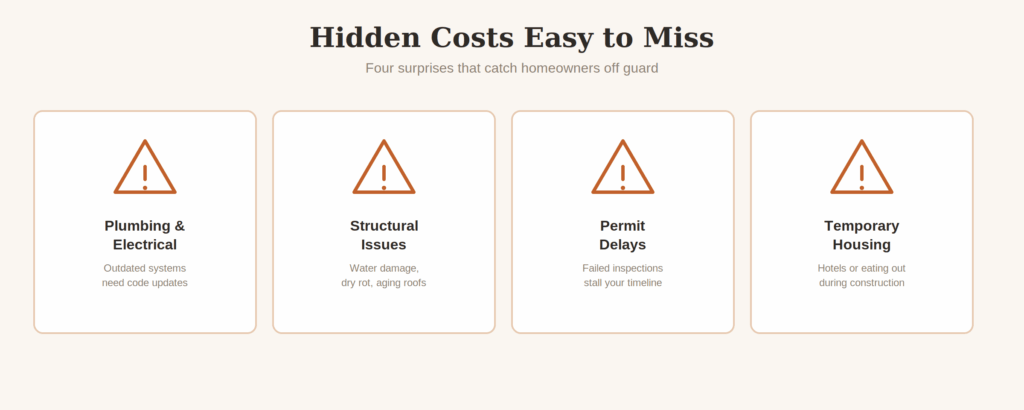
It’s easy to go over budget on a home remodel. Hidden costs are a major reason for this issue. These are the expenses that got overlooked in the planning phase, only to surface once work is underway. These are some of the main areas that tend to catch homeowners off guard.
Plumbing & Electrical Upgrades
Older homes with outdated systems can carry a real cost surprise. Knob and tube wiring, for example, is common in homes built before the 1950s and can run thousands of dollars to bring up to code.
Structural Issues
Water damage, an aging roof, and dry rot framing are common structural surprises. Some are only visible once the walls are opened, others show signs a trained eye can catch early. Once found, these issues need to be addressed, they only get more expensive to fix the longer they’re left alone.
Permit Delays
Major plumbing, electrical, or structural work usually requires permits. If the work doesn’t pass inspection the first time, you’ll need to fix it and schedule a follow up visit, which can stall the rest of your timeline. Check your local city guidelines to confirm what your project requires.
Temporary Housing
If the areas being worked on include where you eat, sleep, or bathe, factor in whether you’ll need a temporary kitchen, bathroom, or housing arrangement. A hotel, short term rental, or eating out more often can all add real cost to your remodel budget.
Frequently Asked Questions
How much does the average home remodel cost?
Most home remodels fall between $8,000 for a small bathroom update and $200,000+ for a full home renovation. Where your project lands depends primarily on square footage, material quality, and whether you hire a contractor or handle some of the work yourself.
What is the most expensive part of a remodel?
Materials typically make up the largest share of a remodel budget, at roughly 50% of total cost, followed by labor at around 40%. Kitchens and bathrooms carry the highest costs per square foot of any room, due to plumbing, electrical, and cabinetry work.
How can I lower my remodel costs without sacrificing quality?
Keeping your existing layout, mixing budget and luxury materials strategically, getting multiple contractor quotes, and taking on select DIY tasks like painting or demolition are the most effective ways to cut costs without cutting corners.
Do I need a permit for my remodel?
Most remodels involving structural changes, electrical work, or major plumbing require a permit. Cosmetic updates like painting or flooring usually don’t. Check with your local building department to confirm what your specific project needs.
Conclusion
The remodel cost calculator is designed to help you put your budget into perspective. It shows you whether the amount your project requires lines up with what you’ve set aside. This is the first real step in deciding if you’re ready to begin your next home remodel.
The goal is to walk into this project informed, not overwhelmed. With the right planning ahead of time, you’ll have a clear sense of what to expect and where your money is going.
If you haven’t already, check out our companion guide, How to Start a Home Remodel, for a full step by step walkthrough of the planning process, from setting goals to building your timeline.
Thank you for visiting Remodel Upgrade. Here we’re dedicated to showing you the best tips and tools for your next home remodel journey.
Please leave a comment below if you have any questions, and check out the related articles for this topic and others like it.

Kevin
I grew up in a family where my dad and several uncles were general contractors. They took me to the jobsites, and also taught me so much about home maintenance. I remember spending several summers in high school helping my father build houses. It gave me so much knowledge that I am excited to share!

lsWyRNAgXxSsjKCJuLgQm
Your comment is awaiting moderation.