Bathroom remodel costs are rarely just a number on a quote. Every estimate reflects dozens of decisions that affect how much you’ll spend, and where you can save money. Understanding these costs helps you make smarter choices, avoid surprises, and feel confident as your remodel moves forward.
This guide breaks down bathroom remodel costs step by step, so you know exactly what to budget for before the first wall comes down. You’ll learn what you will be spending the most on, where homeowners overspend, and how to plan for hidden expenses without blowing your budget.
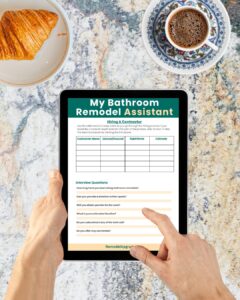
Take Control of Your Bathroom Remodel with the Bathroom Remodel Assistant PDF!
This easy-to-use, downloadable PDF guides you through every stage of your bathroom remodel. As you plan your project, simply fill in the blanks with your own details—no guesswork, no stress. Stay organized, confident, and on track from start to finish, making your remodel smoother, faster, and truly stress-free.
Fillable PDF lets you capture every project detail.
Stay on schedule with clear task tracking.
Follow a step-by-step system to hire the perfect contractor.
The Bathroom Remodel Assistant is the ultimate tool for first-time homeowners and seasoned renovators alike. Get your copy now and take the first step toward your dream bathroom!
Average Bathroom Remodel Cost by Project Type
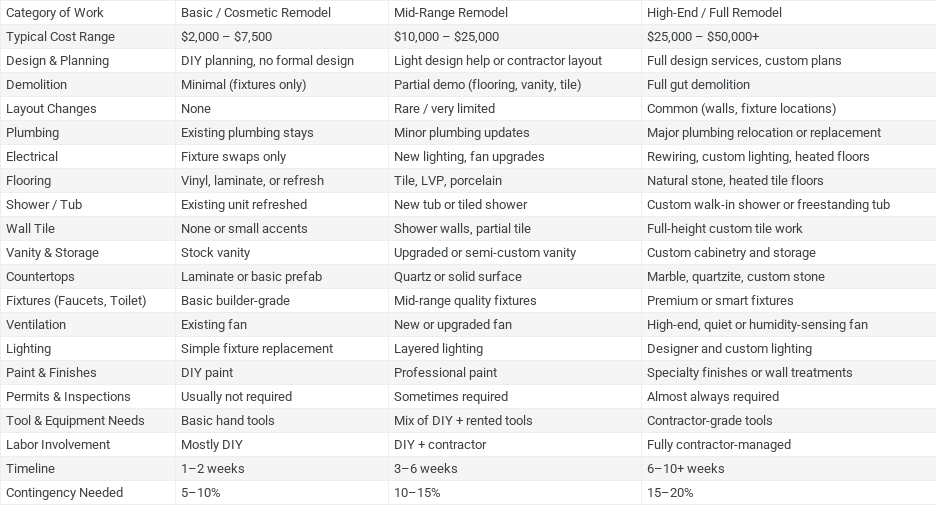
There are different types of bathroom remodels to pick from. They are based on the level of work being done in the bathroom. Your bathroom remodel will fall into one of the categories listed below.
The Cosmetic Bathroom Remodel
This remodel type is considered an upgrade on the surface level. It includes a new paint job, light fixtures, faucet, and minor repairs. This remodel is quick and easy for beginners because it does not include major repairs or work on plumbing and electrical.
The Mid-range Bathroom Remodel
This one includes more work than the cosmetic level remodel. It has functional upgrades like a new toilet or sink. You will improve things like the floor and tile work, as well as new ventilation. You may need to have minor plumbing and electrical work which may be attempted by a homeowner with adequate knowledge in this area.
Full Bathroom Renovation
You are tearing down much of the old space and replacing major elements. These usually include flooring, shower/tub, vanity, fixtures, sometimes layout changes, plumbing, and electrical. You will want to include some cosmetic work as well.
Labor Costs are the Largest Portion of Your Budget
Labor can be the largest portion of your budget. There are also ways that help you bring the cost down substantially. One of these ways is to do some or all of the work yourself.
There is a tradeoff with saving money this way. You end up spending more time on the project than otherwise would have been needed. This can make your overall timeline be extended dramatically. If you are interested in finding a contractor to help you with the labor, check out Hiring The Ideal Contractor.
If your remodel requires extensive work in one or more of the following, I recommend using a contractor:
- Plumbing
- Electrical
- Tile work
- Framing and carpentry
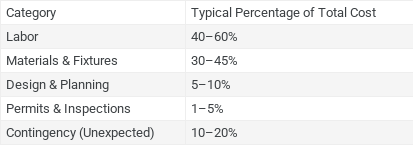
Typical Percentage of Total Labor Cost
This chart shows the typical percentage breakdown of a bathroom remodel budget, helping homeowners understand where their money is most often spent.
Labor Cost Rule of Thumb
- DIY-heavy remodel: Labor drops to 20–35%, materials increase
- Contractor-managed remodel: Labor often exceeds 50%
Older homes: Plan closer to the 20% contingency range
Bathroom Remodel Material Costs
Materials used in a remodel are a huge amount of the overall cost. These can be broken up into several different categories. Depending on the extent of a remodel you are doing, you may not require some of the materials listed below. There are many options if you are looking for affordable bathroom remodel materials.
Tile and Flooring
Material choices for both flooring and tile have a lot of variety. These choices also come with different levels of complexity during installation. Finding budget friendly options that can be installed by beginners is a great way to save on your budget. One of my favorite choices in flooring that is easy to install is vinyl plank flooring.
If going with a natural stone for your floor you want to have a professional installation. This material requires specialty tools that a beginner wouldn’t be using very often. If you have a simple bathroom footprint and would like to attempt this installation, rent or borrow the needed tools. Try not to purchase tools you will only be using once or twice. Give the installation a shot because it isn’t as hard as it may seem. Just follow the process and be careful.
Vanity and Cabinetry
This category is one that has a large assortment of options to choose from. They can also have a huge range in pricing. Choose a vanity and your cabinets that are made out of good material like solid wood. Off the shelf options from big box stores can be a good choice if you are on a budget. They don’t come in custom sizes, which makes them more affordable to purchase.
Fixtures
Fixtures are the items you will install after the major work is done. They include shower and sink faucets, light fixtures, and other features in the bathroom. The prices for these can vary greatly depending on factors like quality, color, and brand. When shopping for a new toilet you can expect to pay $200 for a good quality unit. If you are looking for one with more features you may be paying over $1000. Faucets can vary in price as well. You will be paying around $20-$60 for an entry level model. I suggest looking at mid-range models that are over $70 to around $150. These brands are much more reliable than the entry option which look better and may last longer.
Plumbing & Electrical Expenses
Plumbing work in a bathroom can become expensive very fast. When you think of the location of the plumbing work, it’s typically in the walls and under the subfloor. That means you will need to make access to the plumbing, and then close it back up afterwards. These are added expenses on top of the plumbing work being done.
Moving plumbing lines is one of the more costly and extensive projects to have done in a bathroom. There is a great deal of work that needs to be done in this circumstance. It should be performed by a professional as it involves working on the structural integrity of a home.
Major plumbing work may require permits. Be sure you know if the work you plan on doing will require permits, and get them started before the work begins. You don’t want to wait too long because it may take some time before the inspector has an available slot in their schedule.
Plumbing mistakes can become quite expensive quickly. If the plumbing fails it may cause a major leak that damages other parts of your house. If you don’t discover the leak until after the plumbing is covered back up, there will be extra cost for the demo work that will need to be repaired.
All of the above also applies to electrical work. This can be a dangerous aspect of the bathroom remodel project, and should ideally be done by a professional. Permits may be required for this type of work, so know what level of work is being done, and take the appropriate steps.
Permits, Inspections, and Hidden Fees
When you think of bathroom remodel expenses, you mostly think of the materials, tools, and labor. There are hidden expenses that come with a bathroom remodel. It’s important to know about things like permits, inspections, and “extra” fees that should be factored into your overall total budget. These will sneak up on you and become a problem if you don’t get ahead of it up front. The good news is that not all bathroom remodels require permits, so you should know if the work you will be doing does.
For more information on this topic and others, visit the article called Bathroom Remodel Step-by-Step Guide for First Time Homeowners.
Bathroom Permits
These are not required for every bathroom remodel. If yours includes major work on plumbing, electrical, and structural modifications/updates, it’s good to check if permits are required. An example of a modification that could require a permit is if you are upgrading a shower and need to make changes to the drain line. I had this come up in a remodel I did, and the inspector made me change my drain layout before I could move forward with the installation. That’s why it’s important to not glue any pipes or make other permanent connections until the inspection is completed.
Bathroom Inspections
When a permit is required, that means you need to have an inspection done on one or more areas of your bathroom remodel. A scheduled time for the inspector to see the work and make a judgement on if it was done to the right standards. If multiple inspections are needed you may be able to coordinate them to take place during the same meeting. Make sure to have all the work done before the inspector arrives.
If the work doesn’t pass inspection you need to make appropriate changes before scheduling another inspection. This process adds to the project’s overall cost and possibly extends the project timeline.
Hidden Bathroom Remodel costs
Below is a list of some of the more common hidden fees associated with a bathroom remodel. It’s possible none of these are associated with your project. It’s also possible some different ones are part of the work being done in your bathroom. Budget accordingly to be sure to not go over budget with your project.
- Inspection fees charged by the city
- Permit expediting fees for faster approval
- Disposal or landfill fees debris removal
- Temporary utility shut-off or reconnect fees
- Code upgrades
Tool & Equipment Costs For a Bathroom Remodel
Tool and equipment costs are often overlooked when budgeting for a bathroom remodel, especially by homeowners planning to handle part of the work themselves. While contractors typically include tool expenses in their labor rates, DIY or hybrid remodels may require you to purchase or rent specialized equipment to complete the job safely and correctly.
Basic Tools Most Homeowners Already Have
Many remodel tasks rely on common household tools. If you already own them, these won’t impact your budget. If you need to purchase multiple tools for the job the cost can add up quickly. Below are some of the most basic tools required for a bathroom remodel.
- Tape measure
- Level
- Hammer
- Pry bar
- Utility knife
- Screwdrivers
- Adjustable wrench
- Pliers
- Cordless drill/driver
- Impact driver
- Oscillating multi-tool
- Circular saw
- Miter saw
- Reciprocating saw
- Tile cutter
- Tile saw
- Notched trowel
- Grout float
- Mixing paddle
- Bucket
- Pipe cutter
- PEX crimping tool
- Basin wrench
- Stud finder
- Shop vacuum
- Wet/dry vacuum
- Caulking gun
- Putty knife
- Safety glasses
- Gloves
- Dust mask or respirator
- Hearing protection
- Knee pads
- Work light
- Extension cord
Specialty Tools for Bathroom Remodels
Bathrooms require specialized tools for several different reasons. Some of these can be for tile, plumbing, and moisture-resistant work being done. There is a good chance you won’t be using some of these tools more than once or twice. If you can rent or borrow them instead of purchasing, this will be a better option.
- Tile saw or tile cutter
- Notched trowels and grout floats
- Mixing paddle for mortar or thinset
- Pipe cutter and crimping tools (PEX systems)
- Wet/dry vacuum for cleanup and water control
Safety Equipment
Safety gear is essential and should be factored into your remodel budget. This is arguably the most important equipment in the project. Make sure you have the essential protective equipment on hand for you to use in your project.
- Safety glasses and gloves
- Dust masks or respirator
- Hearing protection
- Knee pads (especially for tile work)
Estimated cost: $30–$100
Contractor vs. DIY Cost Considerations
Pro Tip: Renting specialty tools makes more financial sense for one-time projects, while purchasing good quality tools can be a great investment for future renovations.
There are pros and cons to both hiring a contractor and doing the work yourself. An ideal contractor will do the work in a timely manner. They have all the required tools for the project’s needs. They know what to do to get a professional looking result in your bathroom remodel. But their biggest down side is hiring contractors can be expensive. It is an added fee of somewhere between 40-60% of the overall budget depending on the amount of work they do.
Doing it yourself can be a great option in a few different scenarios. If you have plenty of time to invest and don’t have a tight timeline, this can work well for you. Having the required tools, or access to the ones you need is something to consider. Make sure you have the skill set needed for the work being done. Some things can be picked up along the way, but attention to detail is important.
A few specialty tools may be required during a bathroom remodel. To get a clear understanding of all the tools you will need, visit the article Bathroom Remodel Tool Checklist for more information.
Bathroom Remodel Contingency Fund
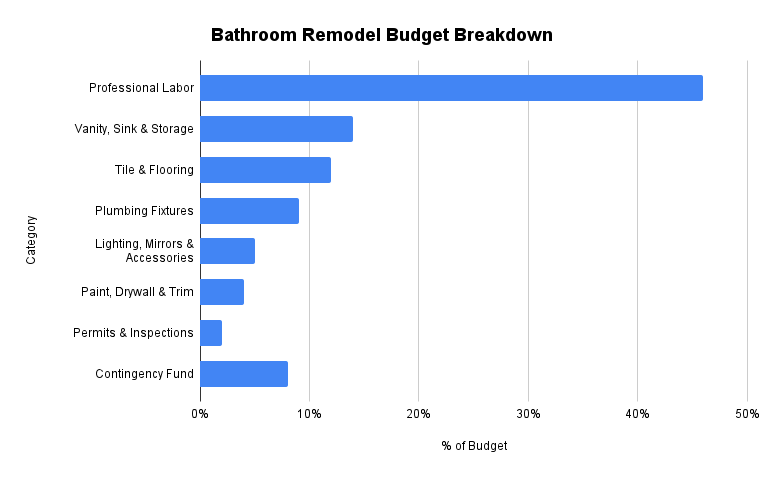
Pro Tip: When determining your bathroom remodel budget, add an additional 5-15% in the “Contingency Fund” line item. This will be a good buffer to keep your remodel on track to finish in time.
It’s possible for you to find something major during your remodel that you weren’t expecting. There’s a chance you find something like a section of subfloor that’s water damaged once you pull up the old laminate flooring. This can lead to added expense that you didn’t factor into the original budget.
Common Unexpected Issues:
- Water damage
- Mold
- Damaged subfloor
- Damaged studs
A contingency fund gives you room to handle these types of surprises without putting a delay in the project. It also means you don’t need to cut costs in other areas, possibly changing your dream design.
In practical terms, a contingency fund is a safeguard to keep things flowing when you run into the unexpected. It keeps your remodel moving forward on time, and keeps your must-have items in the plan. Only use these funds if an issue that falls into this category arises.
Rule Out Unnecessary Bathroom Remodel Costs
Pro Tip: Make and maintain a checklist during the duration of your bathroom remodel. It should have all the major stages of the remodel, as well as the smaller tasks listed in it. If you are unclear what some of the tasks are you can include the ones you know and add the rest when you get to them.
There are a few areas of a remodel that may cause you to spend money unnecessarily. Try to avoid these if possible, but if not, work them into your budget ahead of time.
Keeping your plumbing in place means you won’t be making major changes to the bathroom’s layout. The sink, toilet, and tub/shower should stay in their current locations. Moving plumbing is a lot of work that requires more materials to patch the floors, walls, and other areas being opened up.
Ordering materials early will help keep your timeline moving. Any down time can be considered lost money, especially if you are using tradesmen. If you are delivering the materials yourself you will also need to find a means to transport them. This can be a challenge if it’s larger or heavy items.
Being able to do the work yourself will help lower your overall cost. But don’t risk biting off more than you can chew, so to speak. Take a look at the stages of the remodel on your checklist to see what you know how to do. For the parts you don’t know yet look up some how to videos that walk through all the steps. This will show you what tools are required, and whether the technique is something you feel comfortable attempting.
Bathroom Remodel Budget Mistakes to Avoid
Underestimating labor is easy to do. It’s important you have the money ready before the payments need to be made. Take a look at the chart in the labor section above to see how much should be set aside for this category.
Contingency should always be accounted for. This will ensure you are ready for any challenge thrown your way. The fund may not be dipped into during the course of the project, but if it’s needed you would be grateful to have it.
Permits are easy to overlook in a bathroom remodel. Doing this can lead to greater problems in the future, and possibly more work that wouldn’t otherwise be required.
Don’t get cheap materials that will not hold up very long. When you pick your materials you want to find a brand that is reliable, and materials that have good reviews. Choosing poor quality materials will fail over time and need to be replaced sooner.
Frequently Asked Questions
How much should I budget for a bathroom remodel?
Your budget depends on the extent of the work being done. A basic remodel is between $2000-$7500. A mid level bathroom remodel is between $10,000-$20,000. And a high end bathroom remodel is between $15,000-$30,000+.
Is labor or materials more expensive?
Both are similar in percentage amount of your budget. Labor is generally a bit more expensive than materials. But this can flip if you go with high end material options. You won’t be paying as much in labor costs if you do some of the work yourself.
Can I remodel a bathroom on a tight budget?
A basic level bathroom remodel can be done on a tight budget. For a beginner this would look like a paint refresh, new fixtures, and new lighting. The more items you add to the list means the budget and work will increase as well.
What costs surprise homeowners the most?
Hidden damage is the biggest surprise to a homeowner. These are things you don’t expect when creating your checklist. If a large amount of hidden damage is found and you don’t have a contingency fund the remodel may come to a halt before it’s finished.
Conclusion
A bathroom remodel doesn’t become affordable or expensive by accident. This happens through planning, awareness, and informed decisions. When you understand where the money actually goes, you gain control over the process. Costs feel far more manageable when they’re prioritized properly.
By breaking your remodel into clear categories, budgeting realistically for labor and materials, and setting aside a contingency for the unknown, you reduce stress and protect the quality of the finished space. Whether you’re tackling parts of the work yourself or hiring professionals, the goal is the same. You will have a bathroom that functions well, lasts longer, and fits your budget without regret.
The most successful remodels aren’t defined by how much was spend. They are built through proper planning and seeing it through to the end. Take the time to prepare, stay flexible when surprises appear, and make educated decisions that support both your short-term budget and long-term goals.

Kevin
I grew up in a family where my dad and several uncles were general contractors. They took me to the jobsites, and also taught me so much about home maintenance. I remember spending several summers in high school helping my father build houses. It gave me so much knowledge that I am excited to share!